
October 22 has been marked by key historical events across politics, exploration, and social progress. Here are 12 significant events that took place on this day, with only real quotes included.
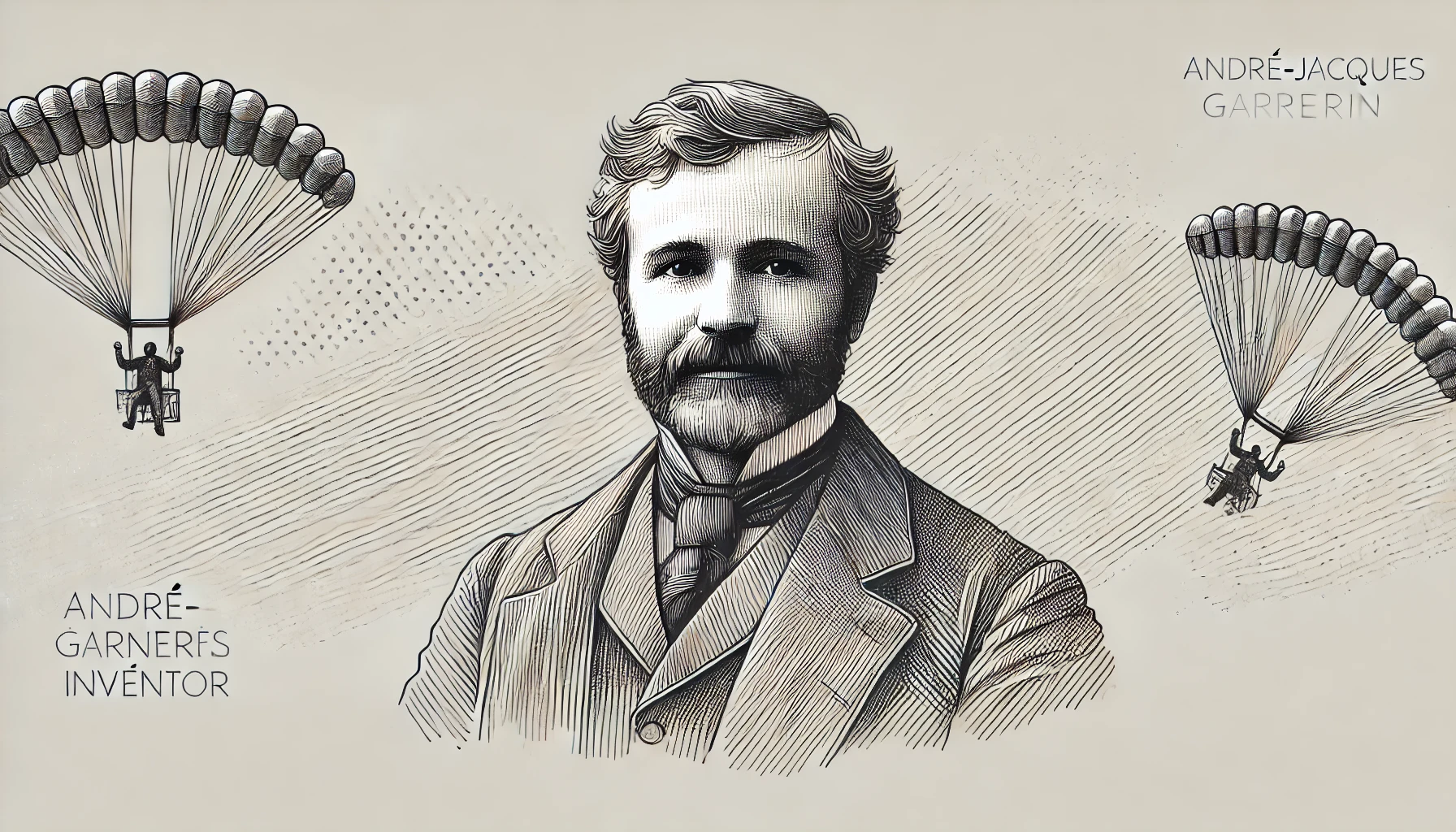
1797: First Parachute Descent by André-Jacques Garnerin
On October 22, 1797, André-Jacques Garnerin made the world’s first successful parachute jump from a hot air balloon over Paris. Garnerin’s daring jump from a height of about 3,200 feet (1,000 meters) marked the beginning of modern parachuting.
“I felt the air rushing around me as I fell, but in the moment, I trusted in my invention. The thrill of the descent was the proof that man can conquer the skies, not only in ascent but in return.”
— André-Jacques Garnerin.
1836: Sam Houston Elected President of the Republic of Texas
On October 22, 1836, Sam Houston was elected as the first president of the Republic of Texas, just months after leading Texan forces to victory over Mexico at the Battle of San Jacinto. Houston’s leadership ensured the survival of the fledgling republic.
“Texas has yet to learn submission to any oppression, come from what source it may.”
— Sam Houston.
1844: The Great Disappointment
On October 22, 1844, thousands of followers of William Miller, a preacher from New York, experienced what became known as the Great Disappointment when Jesus Christ did not return to Earth as Miller had predicted. This event marked the beginning of the Seventh-day Adventist movement.
“I confess my error, and acknowledge my disappointment; yet I still believe that the day of the Lord is near, even at the door.”
— William Miller.
1962: Cuban Missile Crisis Escalates
On October 22, 1962, President John F. Kennedy delivered a televised address announcing the discovery of Soviet nuclear missiles in Cuba, marking the peak of the Cuban Missile Crisis. Kennedy’s announcement of a naval blockade brought the world to the brink of nuclear war.
“We will not prematurely or unnecessarily risk the costs of worldwide nuclear war, in which even the fruits of victory would be ashes in our mouth—but neither will we shrink from that risk at any time it must be faced.”
— President John F. Kennedy.
1859: Spain Declares War on Morocco
On October 22, 1859, Spain declared war on Morocco in a conflict known as the Spanish-Moroccan War. This war, fueled by territorial ambitions and conflict over piracy, lasted until 1860, with Spain eventually gaining control of key areas.
“The defense of national honor and territorial integrity must be met with determination and action, lest we lose our place in the world.”
— Spanish official.
1934: FBI Shoots and Kills Pretty Boy Floyd
On October 22, 1934, notorious American gangster Charles “Pretty Boy” Floyd was shot and killed by the FBI in East Liverpool, Ohio. Floyd had been wanted for numerous crimes, including robbery and murder, and his death marked the end of a notorious criminal career.
“In the pursuit of justice, we must remain vigilant against those who seek to tear down the fabric of society with violence and lawlessness.”
— J. Edgar Hoover, FBI Director.
1964: Jean-Paul Sartre Declines Nobel Prize in Literature
On October 22, 1964, French existentialist philosopher Jean-Paul Sartre was awarded the Nobel Prize in Literature, but he declined the honor. Sartre believed that a writer should not allow themselves to be turned into an institution.
“A writer should not allow himself to be turned into an institution. This would destroy the impact of his position.”
— Jean-Paul Sartre, on refusing the Nobel Prize.
1975: Soviet Venera 9 Sends First Images from Venus
On October 22, 1975, the Soviet spacecraft Venera 9 became the first human-made object to send images from the surface of Venus. This achievement marked a significant milestone in space exploration and the study of other planets in the solar system.
“In these images, we capture a glimpse of a world so alien, so distant, yet it beckons us to learn more, to reach further into the unknown.”
— Soviet space scientist.
1991: Anita Hill Testifies in Clarence Thomas Hearings
On October 22, 1991, Anita Hill testified before the U.S. Senate Judiciary Committee, accusing Supreme Court nominee Clarence Thomas of sexual harassment. Hill’s testimony sparked a national conversation on sexual harassment and women’s rights in the workplace.
“I could not keep silent when I knew that the truth was not being told. My responsibility is to tell the truth, and that is what I have done.”
— Anita Hill, during her testimony.
1978: Papal Inauguration of John Paul II
On October 22, 1978, Pope John Paul II was inaugurated as the 264th pope of the Roman Catholic Church. He became the first non-Italian pope in over 450 years and went on to serve as a transformative figure in global religious and political matters.
“Do not be afraid. Open wide the doors to Christ. To his saving power, open the boundaries of states, economic and political systems, the vast fields of culture, civilization, and development.”
— Pope John Paul II, during his inaugural address.
2008: India Successfully Launches Chandrayaan-1
On October 22, 2008, India’s space agency ISRO successfully launched its first lunar mission, Chandrayaan-1. This mission was a landmark in India’s space exploration efforts, with Chandrayaan-1 making key discoveries about the Moon’s surface and its water molecules.
“We have reached the Moon, not just as a nation, but as representatives of humanity’s unquenchable thirst for exploration and knowledge.”
— Indian Space Research Organization (ISRO) spokesperson.
1973: The Saturday Night Massacre
On October 22, 1973, the Saturday Night Massacre occurred during the Watergate scandal when President Richard Nixon ordered the firing of special prosecutor Archibald Cox. The event led to a public outcry and contributed to Nixon’s eventual resignation.
“I have never been a quitter. To leave office before my term is completed is abhorrent to every instinct in my body. But as President, I must put the interests of America first.”
— Richard Nixon.
Leave a Reply
You must be logged in to post a comment.