
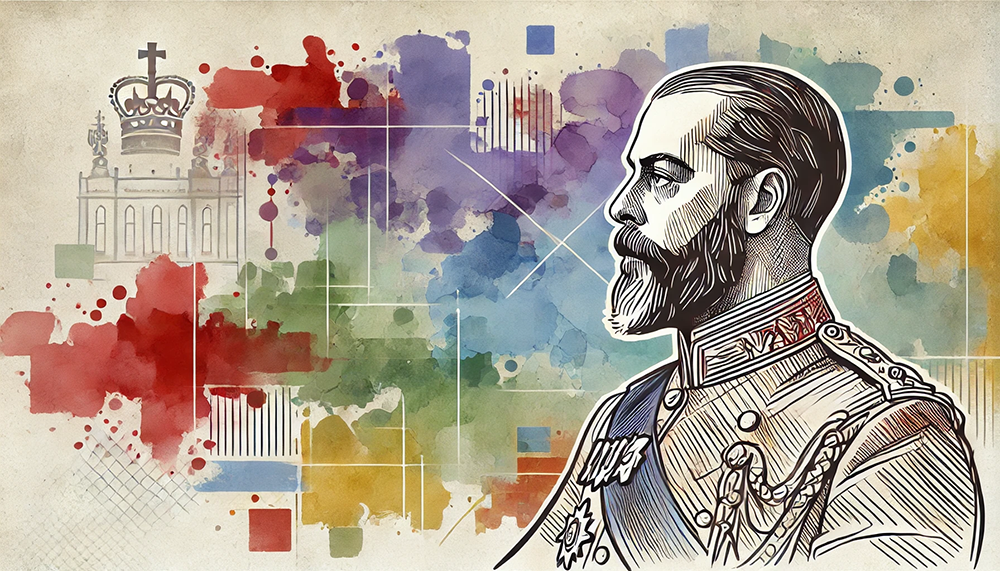
1215: Fourth Lateran Council Begins
On November 11, 1215, the Fourth Lateran Council convened in Rome under Pope Innocent III. This council established important reforms within the Catholic Church, including requirements for annual confession and communion.
“Let this council serve as a beacon of clarity, where the faithful find guidance, and our Church renews its commitment to truth and justice.”
~ Pope Innocent III
1620: Pilgrims Sign the Mayflower Compact
On November 11, 1620, the Mayflower Compact was signed by 41 Pilgrim men aboard the Mayflower, establishing a form of self-governance and social contract for the Plymouth Colony. This document became a foundation for democratic governance in America.
“In the name of God, we covenant and combine ourselves together into a civil body politic for our better ordering and preservation.”
~ Excerpt from the Mayflower Compact
1831: Nat Turner Executed in Virginia
On November 11, 1831, Nat Turner, leader of a significant slave rebellion in Virginia, was executed. His revolt, which led to the deaths of dozens of white citizens, heightened tensions over slavery in the United States.
“I am here, not to make excuses for what I have done, but to testify that the spirit of freedom, though it may be shackled, cannot be extinguished.”
~ Nat Turner
1880: Australian Outlaw Ned Kelly Hanged
On November 11, 1880, Ned Kelly, infamous Australian bushranger, was hanged in Melbourne. Seen as both a folk hero and a criminal, Kelly’s defiance against the authorities made him a lasting symbol of rebellion in Australia.
“Such is life.”
~ Ned Kelly, his last words before execution
1887: Haymarket Martyrs Executed in Chicago
On November 11, 1887, four anarchists, known as the Haymarket Martyrs, were executed in Chicago for their alleged roles in the Haymarket Riot. The incident, which began as a labor rally, became a turning point in labor rights advocacy.
“The day will come when our silence will be more powerful than the voices you are throttling today.”
~ August Spies, one of the Haymarket Martyrs
1918: World War I Ends with Armistice
On November 11, 1918, World War I ended with the signing of the Armistice between the Allies and Germany. The agreement took effect at the 11th hour of the 11th day of the 11th month, bringing a close to a devastating conflict.
“To the dead we owe the truth; to the living, peace. This day is a reminder that humanity must strive toward harmony, not destruction
~ King George V
1921: Tomb of the Unknown Soldier Dedicated
On November 11, 1921, the Tomb of the Unknown Soldier was dedicated at Arlington National Cemetery in Virginia to honor unidentified American soldiers lost in World War I. This solemn monument symbolizes the sacrifices of all fallen soldiers.
“Here rests in honored glory an American soldier known but to God.”
~ Inscription on the Tomb of the Unknown Soldier
1954: Armistice Day Renamed Veterans Day in the United States
On November 11, 1954, President Dwight D. Eisenhower signed legislation renaming Armistice Day as Veterans Day to honor all U.S. military veterans, rather than just those who served in World War I.
“This day is a testament to the brave men and women who have fought for freedom and justice, preserving our way of life.”
~ Dwight D. Eisenhower
1975: Angola Gains Independence from Portugal
On November 11, 1975, Angola declared its independence from Portugal after years of colonial rule. However, the country’s freedom was followed by a civil war that lasted until 2002, affecting generations of Angolans.
“Today, Angola is free, but let us also find peace and unity to ensure a future worthy of this great nation.”
~ Agostinho Neto, Angola’s first President
2000: International Space Station Hosts First Long-Term Crew
On November 11, 2000, Expedition 1 arrived at the International Space Station (ISS), marking the beginning of continuous human presence in space. This mission laid the foundation for long-term international cooperation in space exploration.
“This station is not just a lab in the sky; it’s a testament to humanity’s desire to reach beyond our planet, united in exploration and discovery.”
~ Bill Shepherd, Expedition 1 Commander
Leave a Reply
You must be logged in to post a comment.