
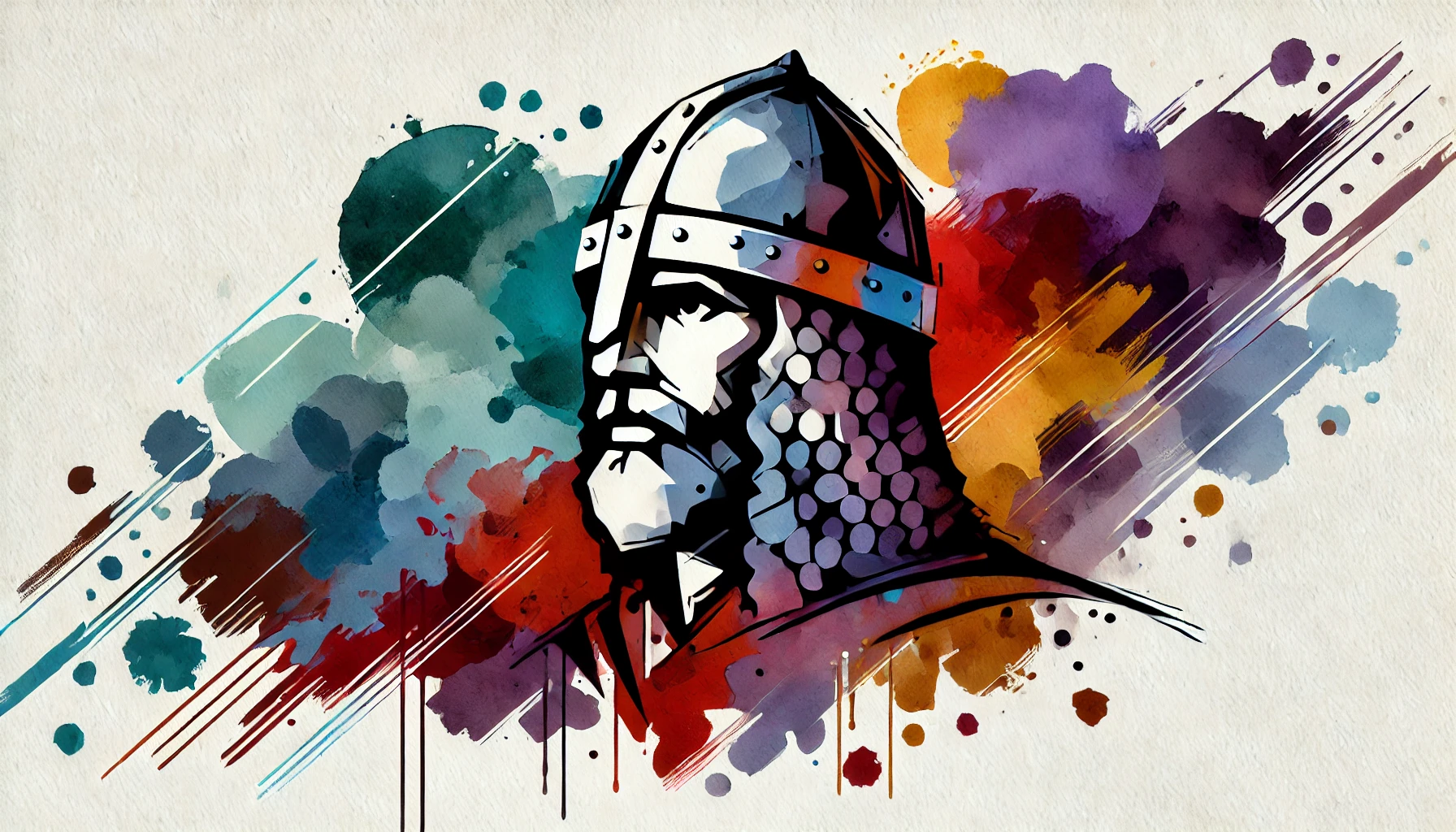
1443: Skanderbeg Rises Against the Ottoman Empire
On November 28, 1443, Skanderbeg, the Albanian national hero, raised his flag in Krujë, marking the start of his rebellion against the Ottoman Empire. Skanderbeg’s resistance became a symbol of Albanian unity and independence.
Freedom is not given; it is earned by those who refuse to bow before oppression.
~ Skanderbeg
1520: Ferdinand Magellan Crosses the Strait of Magellan
On November 28, 1520, Ferdinand Magellan navigated the Strait of Magellan, a passage at the southern tip of South America. This was a crucial step in the first circumnavigation of the Earth.
The horizon whispers of lands unseen, and the brave sail toward it with hope as their compass.
~ Ferdinand Magellan
1814: The Times of London Uses the Steam-Powered Printing Press
On November 28, 1814, The Times of London became the first newspaper printed using a steam-powered printing press, revolutionizing the publishing industry by making mass printing faster and more efficient.
Knowledge shared is knowledge multiplied; the printed word is its fastest courier.
~ The Times editorial
1908: Birth of Claude Lévi-Strauss, Featured Person
On November 28, 1908, Claude Lévi-Strauss, the French anthropologist and ethnologist, was born. Often regarded as the father of structural anthropology, Lévi-Strauss profoundly influenced the study of human culture and myth.
The wise man doesn’t give the right answers; he poses the right questions.
~ Claude Lévi-Strauss
Lévi-Strauss believed that the pursuit of knowledge begins with curiosity and inquiry.
Civilization is built on the ability to connect what seems disparate into a meaningful whole.
~ Claude Lévi-Strauss
This reflects his structuralist approach to understanding human behavior and culture.
Myths are not lies; they are truths encoded in the language of imagination.
~ Claude Lévi-Strauss
He emphasized the importance of mythology in understanding societies.
The world began without man and will end without him, but while we are here, let us seek to understand it.
~ Claude Lévi-Strauss
Lévi-Strauss explored humanity’s fleeting role in the grand narrative of existence.
Diversity is the fabric of humanity; understanding it is the thread that binds us together.
~ Claude Lévi-Strauss
This quote encapsulates his lifelong work studying the varied expressions of human culture.
Unusual Facts:
- Lévi-Strauss initially studied law and philosophy before turning to anthropology.
- His work often compared seemingly unrelated cultures to find universal patterns.
- He was exiled to the United States during World War II due to his Jewish heritage.
- His book Tristes Tropiques became a bestseller despite being an academic text.
- Lévi-Strauss considered cooking a key marker of civilization, as it transformed nature into culture.
1925: Grand Ole Opry Begins Broadcasting
On November 28, 1925, the Grand Ole Opry, the longest-running radio broadcast in U.S. history, aired its first show in Nashville, Tennessee. It became a cornerstone of country music.
Country music tells the story of the heart, plain and simple.
~ Early Opry performer
1942: Cocoanut Grove Nightclub Fire in Boston
On November 28, 1942, a fire at the Cocoanut Grove nightclub in Boston killed 492 people, making it one of the deadliest nightclub fires in U.S. history. The tragedy led to significant improvements in fire safety regulations.
Out of tragedy, we must learn not only to rebuild but to ensure such losses are never repeated.
~ Boston fire official
1958: Chad Gains Autonomy from France
On November 28, 1958, Chad became an autonomous republic within the French Community, paving the way for its full independence in 1960.
Autonomy is the first step toward sovereignty; it is the seed from which freedom grows.
~ Chadian leader
1967: The Beatles Release Magical Mystery Tour
On November 28, 1967, The Beatles released their album Magical Mystery Tour. Featuring hits like Penny Lane and Strawberry Fields Forever, the album remains a psychedelic classic.
Music transcends boundaries and speaks the language of dreams and imagination.
~ Paul McCartney
1980: The WHO Declares Smallpox Eradicated
On November 28, 1980, the World Health Organization announced the official eradication of smallpox, marking a monumental achievement in global health.
The eradication of smallpox proves what humanity can achieve when united against a common enemy.
~ WHO official
2004: Ukraine’s Orange Revolution Gains Momentum
On November 28, 2004, massive protests erupted in Ukraine over allegations of election fraud during the presidential elections. These events became known as the Orange Revolution and led to significant political reforms.
The voice of the people is louder than any decree, and its echo can reshape nations.
~ Ukrainian protest leader
Let me know if you’d like any adjustments or additions!
Leave a Reply
You must be logged in to post a comment.