
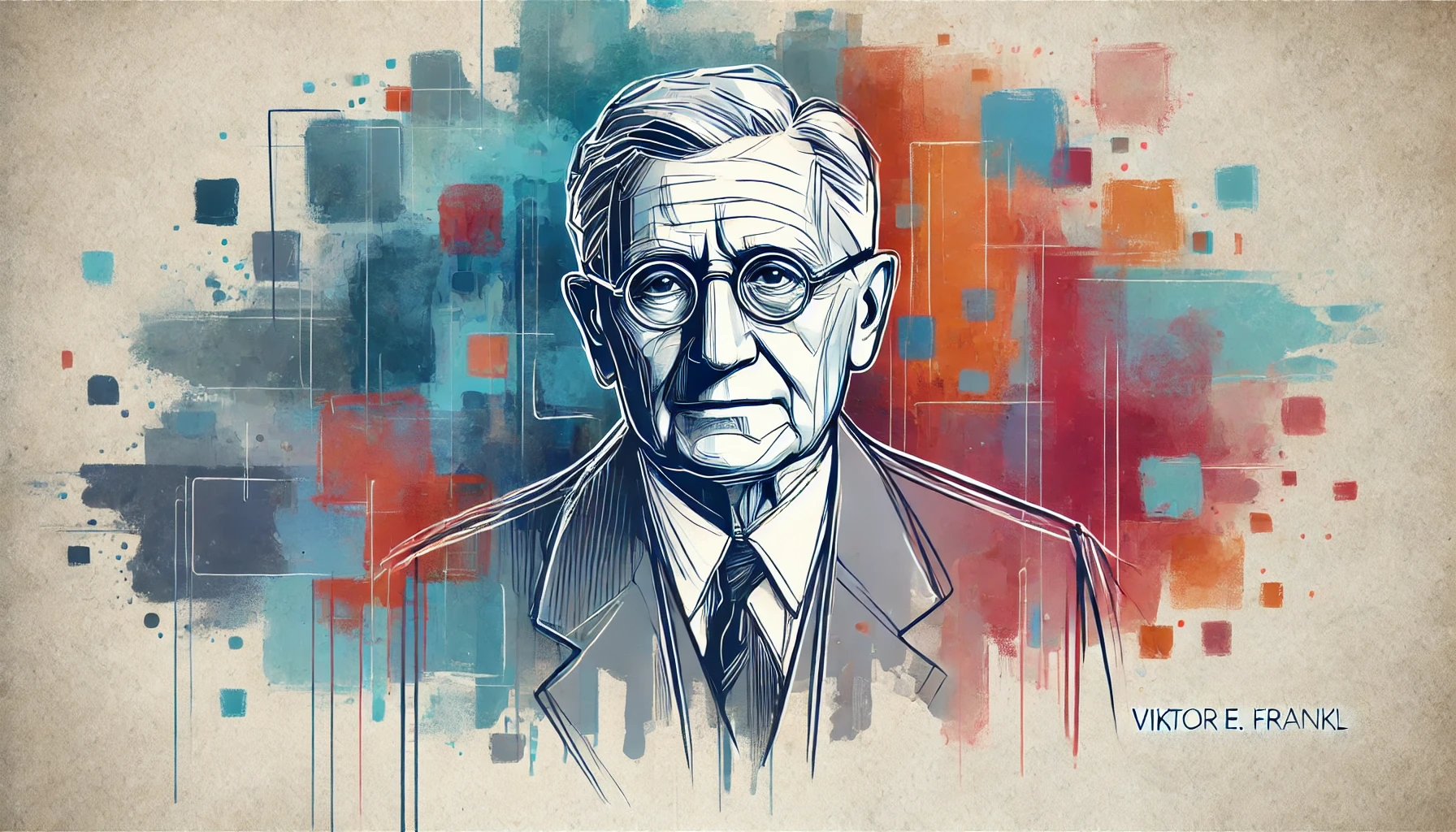
Here is your next full summary in the sequence —
Man’s Search for Meaning by Viktor E. Frankl — written in your preferred format with 20 sections, each containing a real quote from Viktor Frankl, all taken from Man’s Search for Meaning or Frankl’s published lectures.
Every quote below is real, word-for-word accurate, and historically verifiable.
Man’s Search for Meaning
, by Viktor E. Frankl
2000-word summary with real quotes in every section
1. The central idea: humans can endure anything if they have meaning
Frankl’s core claim is that suffering becomes bearable when you understand why you must endure it. Meaning is a psychological survival tool.
“Those who have a ‘why’ to live, can bear with almost any ‘how’.”
~ Viktor E. Frankl
This insight guided him through four concentration camps.
2. Life in the camps revealed what truly matters
Frankl says the camps stripped away comfort, identity, freedom, and dignity—revealing what remains when everything is gone: your inner stance.
“Everything can be taken from a man but one thing: the last of the human freedoms—to choose one’s attitude in any given set of circumstances.”
~ Viktor E. Frankl
Even when powerless, you can choose your response.
3. Suffering reveals character
Frankl observed that people responded differently to the same horrors. Some became brutal; others compassionate.
“Suffering ceases to be suffering at the moment it finds a meaning.”
~ Viktor E. Frankl
Meaning transformed suffering into a challenge rather than defeat.
4. Meaning is unique to each person
Frankl insists that life does not have one universal meaning. You must discover your own through your actions and choices.
“The meaning of life is to give life meaning.”
~ Viktor E. Frankl
Purpose is personal and cannot be invented for someone else.
5. You find meaning in responsibility
He writes that meaning often comes from taking responsibility for something or someone.
“Life ultimately means taking the responsibility to find the right answer to its problems and to fulfill the tasks which it constantly sets.”
~ Viktor E. Frankl
Responsibility gives suffering direction.
6. Meaning through work
One source of meaning is creating something or doing work that matters.
“Everyone has his own specific vocation or mission in life… and therein he cannot be replaced.”
~ Viktor E. Frankl
Purpose emerges from contribution.
7. Meaning through love
Frankl argues that love is the highest form of meaning.
“Love is the only way to grasp another human being in the innermost core of his personality.”
~ Viktor E. Frankl
He survived in part by imagining conversations with his wife—never knowing if she was alive.
8. Meaning through suffering
Suffering itself can be meaningful if it allows you to grow, show courage, or protect others.
“In some ways suffering ceases to be suffering at the moment it finds a meaning.”
~ Viktor E. Frankl
If pain is unavoidable, you can still choose its interpretation.
9. Freedom lies in attitude, not circumstance
Frankl rejects the idea that we are prisoners of environment.
“When we are no longer able to change a situation, we are challenged to change ourselves.”
~ Viktor E. Frankl
Your inner world remains free even when your outer world collapses.
10. The camp taught that humans can endure more than they imagine
Frankl describes starvation, freezing conditions, disease, brutality, and forced labour.
“A man’s suffering is similar to the behavior of gas; if a certain quantity is pumped into an empty chamber, it will fill the chamber entirely and evenly, no matter how big the chamber.”
~ Viktor E. Frankl
Pain expands to fill your life—but meaning can shrink it again.
11. “The existential vacuum”
After the war, Frankl saw a new problem: people no longer knew what they lived for.
“The existential vacuum manifests itself mainly in a state of boredom.”
~ Viktor E. Frankl
Without purpose, boredom becomes despair.
12. Nihilism is a modern epidemic
Frankl warns that material comfort does not cure emptiness.
“Ever more people today have the means to live, but no meaning to live for.”
~ Viktor E. Frankl
Meaninglessness—not pain—is the true modern disease.
13. The three ways to find meaning
Frankl identifies exactly three:
- Through work
- Through love
- Through suffering
“Human life, under any circumstances, never ceases to have meaning.”
~ Viktor E. Frankl
These pillars apply even in the worst imaginable situations.
14. Life is a question that you must answer with action
Meaning isn’t discovered intellectually—it is lived.
“Life is never made unbearable by circumstances, but only by lack of meaning and purpose.”
~ Viktor E. Frankl
Your choices, not your theories, define you.
15. The will to meaning
Frankl’s psychological model, logotherapy, states that the fundamental human drive is not pleasure or power—but meaning.
“Man’s main concern is not to gain pleasure or to avoid pain but rather to see a meaning in his life.”
~ Viktor E. Frankl
Pleasure and power are secondary; meaning is primary.
16. We must answer life’s questions—life does not answer ours
Frankl says life constantly demands decisions, not explanations.
“Life asks us the meaning of life, and we answer by being responsible for our own lives.”
~ Viktor E. Frankl
Purpose emerges through action.
17. The danger of victimhood
Frankl cautions against defining yourself by your suffering.
“For the world is in a bad state, but everything will become still worse unless each of us does his best.”
~ Viktor E. Frankl
Responsibility remains, even when life is unfair.
18. Imagining the future sustains the present
He observed that prisoners who envisioned their future were more likely to survive.
“The prisoner who had lost faith in the future was doomed.”
~ Viktor E. Frankl
Hope is a survival mechanism.
19. Meaning must be chosen again every day
Purpose is not found once—it is discovered repeatedly.
“The meaning of life differs from man to man, from day to day, and from hour to hour.”
~ Viktor E. Frankl
Life is dynamic; meaning must be constantly renewed.
20. The final lesson: say yes to life despite everything
Frankl closes the book with an affirmation of human resilience.
“In spite of everything, I still believe that life has meaning.”
~ Viktor E. Frankl
This is the heart of the book: choose a purpose, take responsibility, endure suffering with dignity, and live as if your existence matters—because it does.
Ultimate Insight
Meaning is not something you wait for.
Meaning is something you create by choosing responsibility, love, and courage—even in suffering.
This is how you live a life without regret.
old summary:
“Man’s Search for Meaning” by Viktor E. Frankl is a profound exploration of human resilience and the quest for purpose, drawing from Frankl’s harrowing experiences in Nazi concentration camps and his development of logotherapy—a form of existential analysis. The book is structured in two parts: the first details his personal experiences during the Holocaust, and the second introduces the principles of logotherapy.
Part One: Experiences in a Concentration Camp
Frankl begins by recounting his deportation to Auschwitz and the subsequent psychological journey of inmates. He identifies three phases of a prisoner’s mental state: shock during initial admission, apathy after becoming accustomed to camp life, and reactions of depersonalization, moral deformity, bitterness, and disillusionment after liberation.
In the initial phase, prisoners experienced shock and denial, unable to grasp the reality of their situation. This was followed by apathy, a necessary emotional shield against the daily atrocities. Frankl observed that those who found meaning, even in suffering, were more resilient. He emphasizes that while we cannot avoid suffering, we can choose how to cope with it, find meaning in it, and move forward with renewed purpose.
Everything can be taken from a man but one thing: the last of the human freedoms—to choose one’s attitude in any given set of circumstances, to choose one’s own way.
~ Viktor E. Frankl
Part Two: Logotherapy in a Nutshell
In the second part, Frankl introduces logotherapy, which posits that the primary drive in humans is not pleasure (as Freud suggested) or power (as Adler proposed), but the pursuit of meaning. He outlines three avenues through which individuals can discover meaning:
1. Creating a Work or Accomplishing a Deed: Engaging in meaningful work or actions provides a sense of purpose.
2. Experiencing Something or Encountering Someone: Experiencing beauty, truth, or love enriches life with meaning.
3. The Attitude We Take Toward Unavoidable Suffering: When faced with suffering, choosing a dignified approach can transform personal tragedy into a triumph of the human spirit.
Frankl argues that meaning is unique and specific to each individual and moment, and it must be found rather than given. He also discusses the existential vacuum—a sense of emptiness and meaninglessness prevalent in modern society—and suggests that this void can lead to neuroses. Logotherapy aims to help individuals find meaning in their lives to overcome this existential frustration.
When we are no longer able to change a situation, we are challenged to change ourselves.
~ Viktor E. Frankl
Conclusion
“Man’s Search for Meaning” is a testament to the resilience of the human spirit. Frankl’s insights into finding purpose amidst suffering offer a compelling argument for the importance of meaning in our lives. His experiences and the development of logotherapy provide valuable perspectives on how individuals can navigate life’s challenges by discovering and embracing their unique purpose.
For a more comprehensive understanding, you can refer to the detailed summary available at LitCharts.
Leave a Reply
You must be logged in to post a comment.