
1557: First Covenant of Scotland Signed
On December 3, 1557, the First Covenant of Scotland was signed, marking the beginning of the Scottish Reformation. This agreement sought to establish Protestantism as the dominant religion in Scotland.
Faith is not only a belief but a force that shapes the destiny of nations.
~ Scottish reformer
1762: Catherine the Great Expels Jesuits from Russia
On December 3, 1762, Catherine the Great issued an edict expelling the Jesuits from Russia. This action reflected her efforts to consolidate power and limit the influence of foreign religious orders.
A ruler must be the architect of unity, not division, for the good of their people.
~ Catherine the Great
1799: George Washington Delivers His Last Message to Congress
On December 3, 1799, George Washington, in his final address to Congress, reflected on his presidency and the future of the young American republic. He emphasized the importance of unity and constitutional governance.
The Constitution is the guide which I will never abandon.
~ George Washington
1818: Illinois Becomes the 21st U.S. State
On December 3, 1818, Illinois was admitted as the 21st state of the United States. Its strategic location and natural resources would later make it a center of industry and agriculture.
Great states are not born of geography but of the courage and perseverance of their people.
~ Illinois legislator
1842: Birth of Charles Alfred Pillsbury, Featured Person
On December 3, 1842, Charles Alfred Pillsbury, founder of the Pillsbury Company and a pioneer in food production, was born in Warner, New Hampshire. His innovative milling techniques revolutionized the global flour industry.
Success is not a matter of luck; it is the reward for innovation and hard work.
~ Charles Alfred Pillsbury
Pillsbury’s dedication to improving food production transformed an industry.
Feeding the world requires ingenuity, efficiency, and a commitment to quality.
~ Charles Alfred Pillsbury
His vision emphasized both the scale and the ethics of business.
A great business serves its customers, its employees, and its community in equal measure.
~ Charles Alfred Pillsbury
Pillsbury valued the balance between profit and social responsibility.
The foundation of any enterprise lies in the trust and satisfaction of those it serves.
~ Charles Alfred Pillsbury
He believed consumer trust was the cornerstone of long-term success.
The secret to greatness is to always ask, ‘How can we do better?’
~ Charles Alfred Pillsbury
This quote reflects his drive for continuous improvement.
Unusual Facts:
- Pillsbury introduced steam-powered milling, making flour production faster and more efficient.
- He turned Minneapolis into the flour-milling capital of the world during his lifetime.
- Pillsbury’s brand became synonymous with quality baked goods.
- He advocated for farmers’ rights and fair prices for grain suppliers.
- His company logo, the Pillsbury Doughboy, became a cultural icon decades after his death.
1919: Pierre and Marie Curie Honored with Nobel Prizes
On December 3, 1919, Marie Curie and Pierre Curie were awarded their second Nobel Prize in Chemistry for their groundbreaking work on radioactivity. Marie Curie remains the only person to win Nobel Prizes in two different sciences.
Nothing in life is to be feared, it is only to be understood. Now is the time to understand more, so that we may fear less.
~ Marie Curie
1948: UN Convention on Genocide Approved
On December 3, 1948, the United Nations General Assembly adopted the Convention on the Prevention and Punishment of the Crime of Genocide, an international law to combat mass atrocities.
Justice is the foundation of peace, and without it, no society can thrive.
~ UN delegate
1964: Berkeley Free Speech Movement Gains Momentum
On December 3, 1964, the Free Speech Movement at the University of California, Berkeley, staged a massive sit-in to demand greater political freedoms on campus, igniting a nationwide movement for civil liberties.
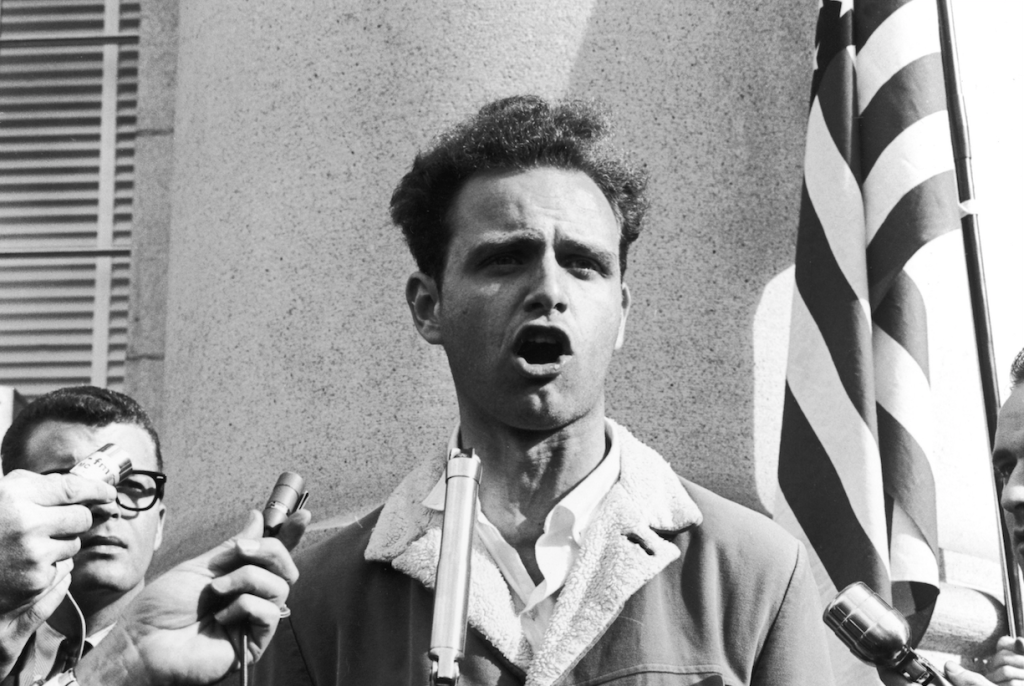
The freedom to speak is the freedom to think, and without it, democracy is silenced.
~ Mario Savio
1979: Eleven Fans Die in The Who Concert Stampede
On December 3, 1979, a tragic stampede occurred at a The Who concert in Cincinnati, Ohio, killing eleven fans. The tragedy led to reforms in crowd management and concert safety.
Music brings people together, but it also demands responsibility from those who organize it.
~ Pete Townshend
1997: Kyoto Protocol Signed
On December 3, 1997, the Kyoto Protocol was signed, committing industrialized nations to reduce greenhouse gas emissions and address climate change. It was a major step in global environmental policy.
The Earth’s future depends on our decisions today; every delay costs us more tomorrow.
~ Al Gore
Leave a Reply
You must be logged in to post a comment.