
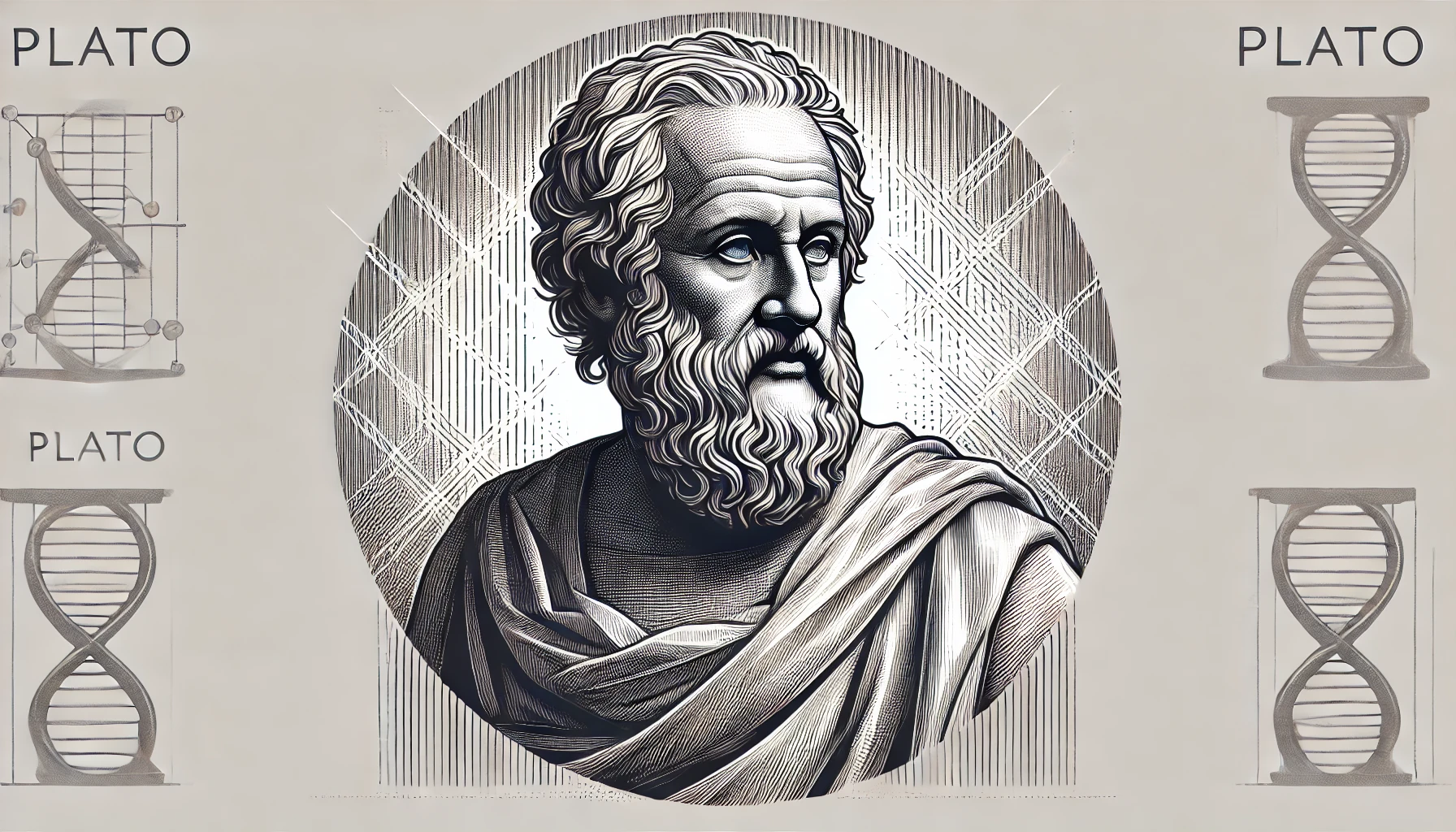
The Republic, by Plato – 2000-word book summary
Overview
Plato’s The Republic is not only a foundational work of Western philosophy—it is also a timeless guide to understanding justice, leadership, education, and the nature of a good life. Written around 380 BCE as a dialogue between Socrates and his companions, it explores what makes both individuals and societies truly just and harmonious.
At its heart, the book argues that a just society mirrors a just soul—and that wisdom, courage, self-discipline, and justice are the keys to happiness and order. Plato’s exploration of truth, morality, and purpose still challenges us to live deliberately, think deeply, and pursue virtue over pleasure.
“The object of education is to teach us to love what is beautiful.”
~ Plato
1. The Central Question: What Is Justice?
The dialogue begins when Socrates is asked: What is justice? Through debate with friends like Glaucon and Thrasymachus, he examines whether justice is merely obeying the law or something higher.
“Justice means minding one’s own business and not meddling with other men’s concerns.”
~ Plato
Socrates argues that justice isn’t about power or convenience—it’s about harmony. In both society and the soul, justice occurs when every part performs its proper role for the common good.
Lesson: True justice isn’t enforced—it flows naturally when reason governs desire.
2. The Tripartite Soul
To explain the nature of justice in individuals, Plato describes the three parts of the soul:
- Reason – seeks truth and guides decisions.
- Spirit – the seat of courage and honor.
- Appetite – desires food, pleasure, and wealth.
“The first and best victory is to conquer yourself.”
~ Plato
When reason rules, supported by spirit and moderated appetite, the soul is just and peaceful. When desire rules, chaos follows.
Practice: Strengthen reason through reflection, courage through discipline, and temper desire through self-control.
3. The Ideal City and the Ideal Self
Plato imagines a just city—the kallipolis—as a metaphor for a just soul. The city has three classes mirroring the soul’s structure:
- Rulers (Reason) – philosophers guided by wisdom.
- Guardians (Spirit) – warriors upholding courage and order.
- Producers (Appetite) – workers, farmers, and artisans providing material needs.
“The measure of a man is what he does with power.”
~ Plato
A healthy society functions when each class fulfills its role without envy or greed, just as a balanced soul does.
Lesson: The harmony of a city reflects the harmony within its people.
4. The Philosopher-King
One of Plato’s most famous ideas is that only philosophers—those who love truth and possess wisdom—should rule.
“Until philosophers are kings, or the kings and princes of this world have the spirit and power of philosophy, cities will never have rest from their evils.”
~ Plato
The philosopher-king seeks not power but justice, guided by reason and the pursuit of the good. He is free from corruption because he values wisdom above wealth.
Reflection: Leadership without philosophy is blind ambition; philosophy without action is incomplete.
5. The Allegory of the Cave
Perhaps the most powerful metaphor in all philosophy, the Allegory of the Cave depicts prisoners chained in darkness, mistaking shadows on the wall for reality.
One prisoner escapes, discovers the world outside, and realizes the sun is the source of truth and life—the Form of the Good.
“How could they see anything but the shadows if they were never allowed to move their heads?”
~ Plato
When the enlightened one returns to free others, they resist and mock him.
Lesson: Most people live trapped by illusion; enlightenment requires courage to face truth—and compassion to guide others toward it.
6. The Form of the Good
At the heart of Plato’s philosophy lies the Form of the Good, the highest reality from which all truth, beauty, and justice emanate.
“The Good is the cause of all that is right and beautiful.”
~ Plato
Knowing the Good allows one to act rightly without external compulsion. It is the light that gives meaning to knowledge and virtue alike.
Practice: Each day, seek what is true, beautiful, and good—these pursuits lead the soul upward.
7. Education and the Soul’s Ascent
Plato believed education should not fill the mind with facts but turn the soul toward the light.
“Education is not what the craftsmen of words claim it to be; it is not putting knowledge into souls that lack it, but turning the soul’s eye toward what is.”
~ Plato
Education must cultivate reason, courage, and virtue, not merely technical skill.
Lesson: True learning awakens wisdom, not vanity.
8. Music, Art, and Moral Formation
Plato viewed music, stories, and art as powerful forces shaping character. He argued that the arts should elevate the soul rather than inflame desire.
“Musical training is a more potent instrument than any other, because rhythm and harmony find their way into the inward places of the soul.”
~ Plato
The content we consume molds our nature; therefore, virtue begins with what we admire.
Practice: Surround yourself with art, language, and ideas that ennoble the spirit.
9. The Noble Lie and the Unity of Society
To preserve harmony, Plato proposed the “noble lie”—a myth that all citizens are born from the same earth but with different metals in their souls: gold (rulers), silver (guardians), and bronze (producers).
“If the rulers could make the citizens believe this myth, they would care more for the city and one another.”
~ Plato
This story symbolizes that everyone has a natural role suited to their character, and all are connected in purpose.
Lesson: Social unity depends on shared belief in justice and the common good.
10. Gender Equality in the Ideal State
Remarkably for his time, Plato argued that women could be guardians and rulers if they possessed equal talent and virtue.
“There is nothing in the constitution of a woman which makes her less fit than a man for the guardianship of the State.”
~ Plato
He believed reason is genderless and that virtue depends on the soul, not the body.
Reflection: The just society values ability and character, not appearance or tradition.
11. The Decline of Political Systems
Plato describes how governments degenerate through five stages:
- Aristocracy (rule by the wise) – the ideal state.
- Timocracy (rule by the ambitious) – honor replaces wisdom.
- Oligarchy (rule by the rich) – wealth replaces honor.
- Democracy (rule by desire) – freedom descends into chaos.
- Tyranny (rule by fear) – chaos breeds dictatorship.
“Democracy is a charming form of government, full of variety and disorder, and dispensing a sort of equality to equals and unequals alike.”
~ Plato
Lesson: Without virtue and reason, freedom collapses into tyranny.
12. The Tyrant’s Soul
Just as societies decay, so do souls. The tyrant’s soul mirrors tyranny—ruled by fear, lust, and greed.
“The tyrant is always poor and full of fear.”
~ Plato
He may possess wealth and power, but he is enslaved by his own passions.
Lesson: The worst slavery is being ruled by your desires.
13. Justice as Harmony
Returning to his central theme, Plato concludes that justice is harmony within the soul and the city.
“Justice in the soul is like health in the body.”
~ Plato
When each part fulfills its function in balance, happiness follows naturally.
Practice: Strengthen your reason through study, your spirit through courage, and your desires through moderation.
14. The Philosopher’s Journey
The philosopher’s path is one of inner transformation—from opinion to knowledge, from shadow to light.
“The soul that has seen truth will be always longing after what is divine.”
~ Plato
True philosophy is not mere theory—it is training the soul to love truth more than comfort.
Lesson: To live wisely is to keep turning toward the light, even when it hurts your eyes.
15. The Role of the Guardians
The guardians—the soldiers and protectors—symbolize courage in the soul. Their training emphasizes loyalty, temperance, and moral strength.
“A true guardian should be gentle to his friends and fierce to his enemies.”
~ Plato
Their courage supports reason, allowing justice to endure.
Lesson: Courage serves wisdom; power without virtue destroys both self and state.
16. The Decline of the Soul
Just as the city declines, so too does the soul when reason loses control. The four decayed forms of the soul parallel the four decayed governments:
- Timocratic soul: ruled by ambition.
- Oligarchic soul: ruled by greed.
- Democratic soul: ruled by impulse.
- Tyrannical soul: ruled by fear and desire.
“The man who does wrong does wrong to himself; he becomes less just, and therefore less happy.”
~ Plato
Lesson: Master your inner city—or chaos will rule you.
17. The Rewards of Justice
Justice, Plato concludes, is not just moral—it is practical. The just person is happier, more peaceful, and more fulfilled than the unjust person.
“The just man does not do right for reward, but because it is his nature to do so.”
~ Plato
Injustice corrupts and fragments the soul, while justice unites and strengthens it.
Lesson: The reward of virtue is freedom from inner turmoil.
18. The Myth of Er
Plato ends with the Myth of Er, a story of a soldier who dies, journeys through the afterlife, and returns to tell of souls choosing their next lives.
“The choice of life is the measure of a man’s virtue.”
~ Plato
The tale illustrates moral responsibility: every soul creates its destiny by the choices it makes.
Reflection: Live as if your actions will echo beyond this life—because they will.
19. Philosophy as Preparation for Death
Plato views philosophy as training for death—not in despair, but in detachment.
“Philosophy is a preparation for dying and death.”
~ Plato
By freeing ourselves from illusion and passion, we learn to live—and die—without fear.
Lesson: To contemplate truth is to transcend mortality.
20. The Final Lesson: The Just Life Is the Happy Life
Plato’s ultimate message is that justice and happiness are one. A well-ordered soul lives in harmony with truth, reason, and virtue.
“The price of apathy toward public affairs is to be ruled by evil men.”
~ Plato
Living justly means living wisely, courageously, and with self-control—serving the good not for reward but for love of truth itself.
Ultimate insight: The good life is not about pleasure, wealth, or reputation—it is about becoming inwardly just, outwardly fair, and eternally in love with truth.
Key Takeaways
- Justice is harmony—within both soul and society.
- Reason must rule desire for true freedom.
- Education should awaken virtue, not vanity.
- Philosopher-kings rule best because they seek truth, not power.
- The good life requires discipline, wisdom, and courage.
- Most people see shadows, not reality—philosophy turns us toward the light.
- Virtue leads to happiness; injustice leads to misery.
- Freedom without virtue decays into tyranny.
- Every soul shapes its destiny through choice.
- To live justly is to live joyfully and die without fear.
Final Reflection
The Republic endures because it reminds us that the quest for justice is ultimately the quest to know ourselves.
“The heaviest penalty for declining to rule is to be ruled by someone inferior to yourself.”
~ Plato
Plato’s vision is both political and deeply personal: until reason governs our inner life, chaos will govern the world. By turning inward toward the light of truth, we become not only just citizens but fulfilled human beings—living, as he dreamed, in harmony with the Good itself.
old summary:
Introduction: Justice and the Ideal State
Plato’s The Republic is one of the most influential works in Western philosophy, exploring the nature of justice and the construction of an ideal state. Written as a Socratic dialogue, it features Socrates engaging with various interlocutors to define justice and examine how it can be realized in both individuals and society.
Justice means minding your own business and not meddling with other men’s concerns.
~ Plato, The Republic
The Definition of Justice
The dialogue begins with Socrates debating the nature of justice with figures like Thrasymachus, who argues that justice is the interest of the stronger, and Glaucon, who suggests that people practice justice out of necessity, not virtue. Socrates counters by proposing that justice benefits both the individual and society, as it aligns with the harmonious functioning of each.
The just man is also the wise and good man, and the unjust man is ignorant and bad.
~ Plato, The Republic
The Tripartite Soul and the Just Individual
Plato introduces the concept of the tripartite soul, dividing it into three parts: the rational, the spirited, and the appetitive. A just individual achieves harmony when reason rules over the spirit and appetite, much like a well-ordered society. This analogy between the soul and the state forms the foundation for the rest of the dialogue.
The soul of man is immortal and imperishable.
~ Plato, The Republic
The Ideal State and Its Classes
Plato outlines his vision of an ideal state, structured into three classes: rulers (philosopher-kings), auxiliaries (soldiers), and producers (farmers, artisans, and merchants). Each class corresponds to a part of the soul: reason, spirit, and appetite. Justice in the state arises when each class performs its role without interfering with the others.
Until philosophers rule as kings, cities will have no rest from their evils.
~ Plato, The Republic
The Role of Education
Education is central to Plato’s ideal state. He advocates for a rigorous program that develops both the mind and body, emphasizing the study of mathematics, philosophy, and physical training. Education is designed to cultivate wisdom and virtue, preparing philosopher-kings to rule wisely.
The direction in which education starts a man will determine his future life.
~ Plato, The Republic
The Allegory of the Cave
One of the most famous sections of The Republic is the Allegory of the Cave, where Plato illustrates the journey from ignorance to enlightenment. Prisoners in a cave mistake shadows for reality until one escapes and discovers the true world outside. This allegory symbolizes the philosopher’s pursuit of knowledge and the duty to guide others out of ignorance.
The truth is that the State in which the rulers are most reluctant to govern is always the best and most quietly governed.
~ Plato, The Republic
The Theory of Forms
Plato’s Theory of Forms underpins much of his philosophy. He argues that the material world is a shadow of the true reality, which consists of unchanging, eternal Forms or Ideas. Justice, beauty, and other virtues exist as perfect Forms, which philosopher-kings must strive to understand to govern justly.
Knowledge of the truth is like a light that makes all things visible.
~ Plato, The Republic
The Decline of the State
Plato explores the degeneration of states, describing a progression from aristocracy (rule by the virtuous) to timocracy (rule by the ambitious), oligarchy (rule by the wealthy), democracy (rule by the masses), and finally tyranny (rule by a despot). Each form represents a corruption of the previous one, driven by imbalances in the soul and society.
Excess of liberty, whether in states or individuals, seems only to pass into excess of slavery.
~ Plato, The Republic
The Philosopher-King
Plato’s philosopher-king is the ideal ruler, guided by wisdom and knowledge of the Forms. Unlike rulers motivated by power or wealth, the philosopher-king seeks to create a just and harmonious society. Plato argues that only those who understand the true nature of reality are fit to govern.
A philosopher is a lover of wisdom, not a lover of opinions.
~ Plato, The Republic
Conclusion: Justice as Harmony
Plato concludes that justice, both in the individual and the state, is a condition of harmony. Just as the rational part of the soul must guide the spirited and appetitive parts, the rulers of the state must guide the auxiliaries and producers. This alignment creates a society where all individuals can fulfill their potential.
The measure of a man is what he does with power.
~ Plato, The Republic
This summary captures the core ideas and philosophical insights of The Republic.
Leave a Reply
You must be logged in to post a comment.