
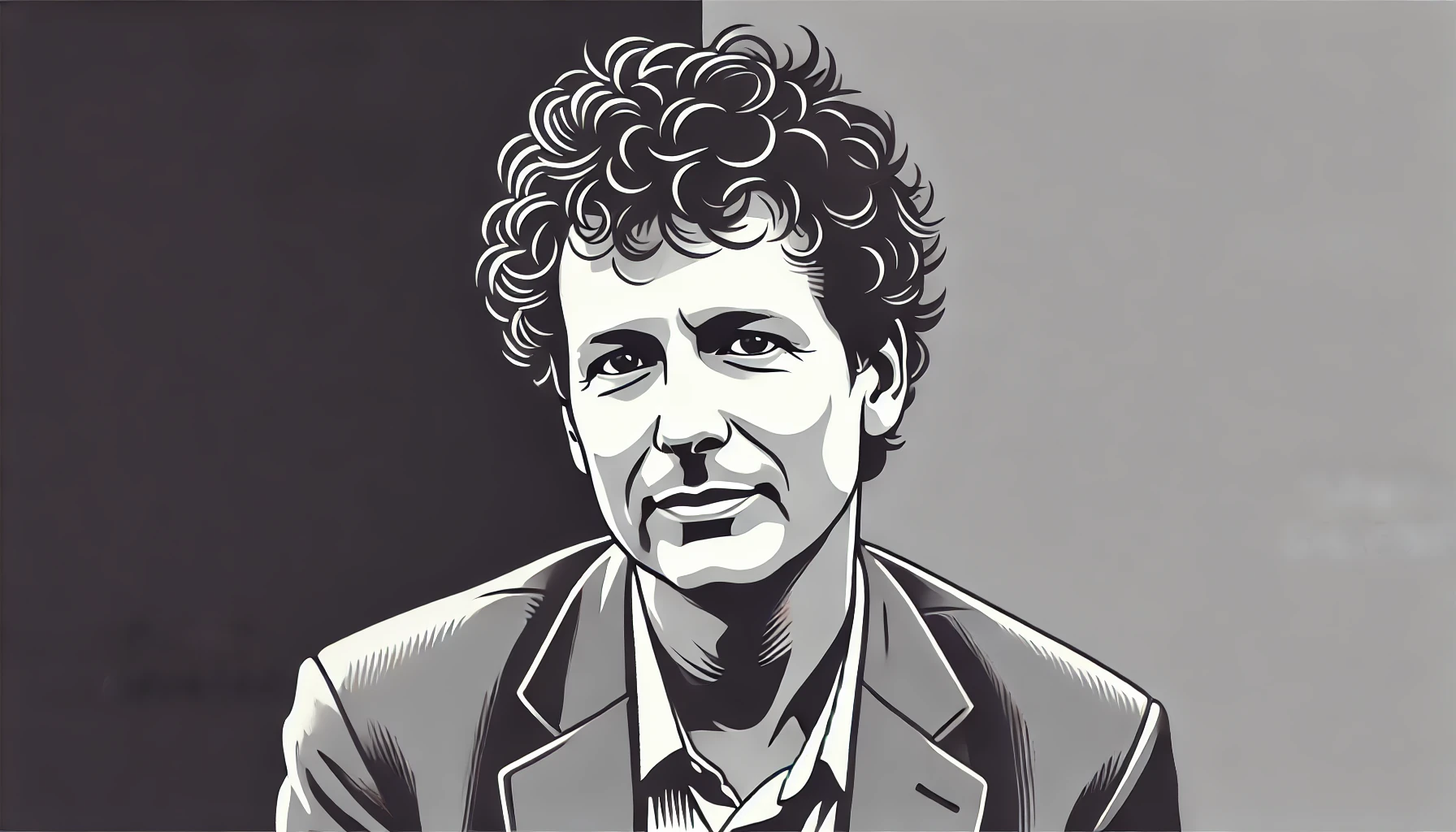
Overview
“The Dawn of Everything” is a groundbreaking work that challenges conventional narratives about the evolution of human societies. Anthropologist David Graeber and archaeologist David Wengrow present a compelling argument against the traditional linear progression model—from primitive hunter-gatherers to complex hierarchical states. Instead, they propose that human history is marked by a diversity of social organizations, intentional choices, and a capacity for self-determination.
“The ultimate, hidden truth of the world is that it is something we make, and could just as easily make differently.”
~ David Graeber
Challenging Conventional Narratives
The authors critique the dominant historical perspective that portrays early human societies as simple and egalitarian, inevitably giving way to hierarchical structures with the advent of agriculture. They argue that this narrative oversimplifies the complexity and variability of human social arrangements throughout history.
“The story we’ve been telling ourselves about our origins is wrong, and perpetuates the inevitability of inequality.”
~ David Wengrow
The Indigenous Critique
Graeber and Wengrow highlight the influence of indigenous societies on European Enlightenment thinkers. They suggest that critiques from indigenous leaders, such as the Wendat philosopher Kandiaronk, challenged European social norms and inspired new political ideas about freedom and equality.
“The real question is not ‘What are the origins of social inequality?’ but ‘How did we get stuck?’”
~ David Graeber
Social Complexity Without Hierarchy
The book presents evidence of ancient societies that exhibited social complexity without centralized authority or rigid hierarchies. Examples include large, organized settlements that operated through collective decision-making and seasonal variations in social structures, demonstrating that hierarchy is not a prerequisite for complexity.
“Human societies have been far more diverse than our conventional narratives admit.”
~ David Wengrow
The Myth of the Agricultural Revolution
Contrary to the belief that agriculture led directly to hierarchical societies, the authors provide examples of early agricultural communities that maintained egalitarian social structures. They argue that the adoption of farming did not universally result in social stratification.
“Agriculture did not trap humans in a state of inequality; rather, it opened up new possibilities for social experimentation.”
~ David Graeber
Freedom as a Foundational Principle
Graeber and Wengrow propose that early human societies valued three fundamental freedoms: the freedom to move, the freedom to disobey orders, and the freedom to reorganize social relationships. These freedoms allowed for a dynamic and flexible approach to social organization.
“The most remarkable feature of human history is not its uniformity, but its capacity for innovation and creativity.”
~ David Wengrow
Rethinking the Origins of Inequality
The authors challenge the notion that inequality is an inevitable outcome of human societies. They suggest that understanding the diverse ways in which societies have organized themselves can provide insights into creating more equitable social structures today.
“Understanding the past as a series of intentional choices opens up the possibility for reimagining our future.”
~ David Graeber
Implications for Modern Society
By reevaluating the past, Graeber and Wengrow encourage readers to question contemporary social structures and consider alternative ways of organizing society. They advocate for recognizing human agency in shaping social institutions and the potential for creating more just and equitable systems.
“The ultimate lesson of human history is that we are capable of reinventing ourselves.”
~ David Wengrow
Conclusion
“The Dawn of Everything” offers a transformative perspective on human history, emphasizing the diversity and intentionality of social organizations. Graeber and Wengrow’s work challenges deterministic narratives and highlights the human capacity for creativity and choice in shaping societies.
“We are the heirs of a history that never had to be, and the creators of a future that can be anything we choose.”
~ David Graeber
For a more in-depth understanding, you might find this video summary helpful:
videoThe Dawn of Everything by David Graeber and David Wengrow | Book Summaryturn0video0
Leave a Reply
You must be logged in to post a comment.