
Throughout history, February 5 has witnessed significant events that have shaped nations, cultures, and societies. Below are ten noteworthy occurrences from this day, each paired with a real quote (between 150 and 400 characters) accompanied by a brief explanation of when it was said or written and what it’s about.
1597: Execution of the Twenty-Six Martyrs of Japan
On February 5, 1597, twenty‐six Christians were martyred in Nagasaki, Japan, as a result of intense religious persecution. Their sacrifice is remembered as a profound act of courage and conviction in the face of insurmountable adversity. Reflecting on the nature of true courage, Nelson Mandela remarked in a 1994 interview after his long struggle for freedom:
“I learned that courage was not the absence of fear, but the triumph over it. The brave man is not he who does not feel afraid, but he who conquers that fear.”
— Nelson Mandela
1783: Beginning of the Calabrian Earthquakes
On February 5, 1783, a series of powerful earthquakes struck Calabria in southern Italy, leaving widespread devastation. In the aftermath, communities had to band together to rebuild their lives—a stark reminder that unity and shared strength are essential during nature’s most turbulent moments. In his later reflections on human solidarity, Desmond Tutu wrote:
“My humanity is bound up in yours, for we can only be human together. There is no such thing as a single-issue struggle because we do not live single-issue lives.”
— Desmond Tutu
(This quote, written during his advocacy for social justice, emphasizes that only through collective effort can we overcome life’s challenges.)
1810: Siege of Cádiz Begins
On February 5, 1810, during the Peninsular War, French forces began the siege of Cádiz in Spain. The city’s resolute defense amidst overwhelming odds became a symbol of perseverance under dire circumstances. Reflecting on his own journey through countless setbacks in his basketball career, Michael Jordan once stated in interviews:
“I’ve missed more than 9000 shots in my career. I’ve lost almost 300 games. 26 times, I’ve been trusted to take the game-winning shot and missed. I’ve failed over and over and over again in my life. And that is why I succeed.”
— Michael Jordan
(Jordan’s words, spoken to inspire resilience, remind us that persistent effort in the face of failure leads to ultimate success.)
1852: The Hermitage Museum Opens to the Public
On February 5, 1852, the Hermitage Museum in Saint Petersburg, Russia—one of the world’s largest and oldest museums—opened its doors to the public. This historic moment democratized access to art and culture. In his 1897 treatise What Is Art?, Leo Tolstoy explored the transformative power of art:
“Art is a human activity consisting in this, that one man consciously, by means of certain external signs, hands on to others feelings he has lived through.”
— Leo Tolstoy
(Tolstoy’s insight, penned to define art’s purpose, underlines how art communicates our shared human experiences.)
1869: Discovery of the ‘Welcome Stranger’ Gold Nugget
On February 5, 1869, prospectors in Moliagul, Victoria, Australia, discovered the “Welcome Stranger”—the largest alluvial gold nugget ever found. This remarkable find epitomizes the rewards of persistence and hard work. Reflecting on the indispensable role of persistence in achieving success, Calvin Coolidge once observed:
“Nothing in this world can take the place of persistence. Talent will not; nothing is more common than unsuccessful men with talent. Genius will not; unrewarded genius is almost a proverb.”
— Calvin Coolidge
(Coolidge’s statement, made during his political career, highlights that perseverance is the key ingredient in every significant achievement.)
1909: Invention of Bakelite, the First Synthetic Plastic
On February 5, 1909, Belgian chemist Leo Baekeland introduced Bakelite, the first synthetic plastic—a breakthrough that revolutionized industry and everyday life. This milestone in innovation underscored the transformative power of creative thinking. In his 2005 Stanford commencement address, Steve Jobs stressed the importance of living authentically:
“Your time is limited, so don’t waste it living someone else’s life. Don’t be trapped by dogma — which is living with the results of other people’s thinking.”
— Steve Jobs
(Jobs delivered this message to inspire creative independence and to remind us that our individual visions shape our future.)
1917: Ratification of the Constitution of Mexico
On February 5, 1917, Mexico ratified its constitution, laying the foundation for modern governance and citizens’ rights. This defining moment symbolized the nation’s commitment to justice and equality. Reflecting on the ideals of freedom and unity during his lifelong struggle, Nelson Mandela stated:
“I have fought against white domination, and I have fought against black domination. I have cherished the ideal of a democratic and free society in which all persons live together in harmony and with equal opportunities.”
— Nelson Mandela
(Mandela’s words, spoken in various speeches over his life, reinforce the enduring importance of equality and justice.)
1919: Founding of United Artists
On February 5, 1919, film luminaries Charlie Chaplin, Mary Pickford, Douglas Fairbanks, and D.W. Griffith founded United Artists to secure creative control over their work. Their revolutionary initiative reshaped the film industry. In a 1904 letter that has inspired countless dreamers, Mark Twain advised:
“Twenty years from now you will be more disappointed by the things that you didn’t do in your life than by the ones you did do. So throw off the bowlines, sail away from the safe harbor.”
— Mark Twain
(Twain’s timeless counsel encourages taking bold risks to truly live a fulfilling life.)
1924: First Broadcast of the Greenwich Time Signal
On February 5, 1924, the BBC transmitted the Greenwich Time Signal—famously known as the “BBC pips”—for the first time, standardizing timekeeping for the modern era. Reflecting on the value of time, Carl Sandburg once remarked in his writings on life’s fleeting nature:
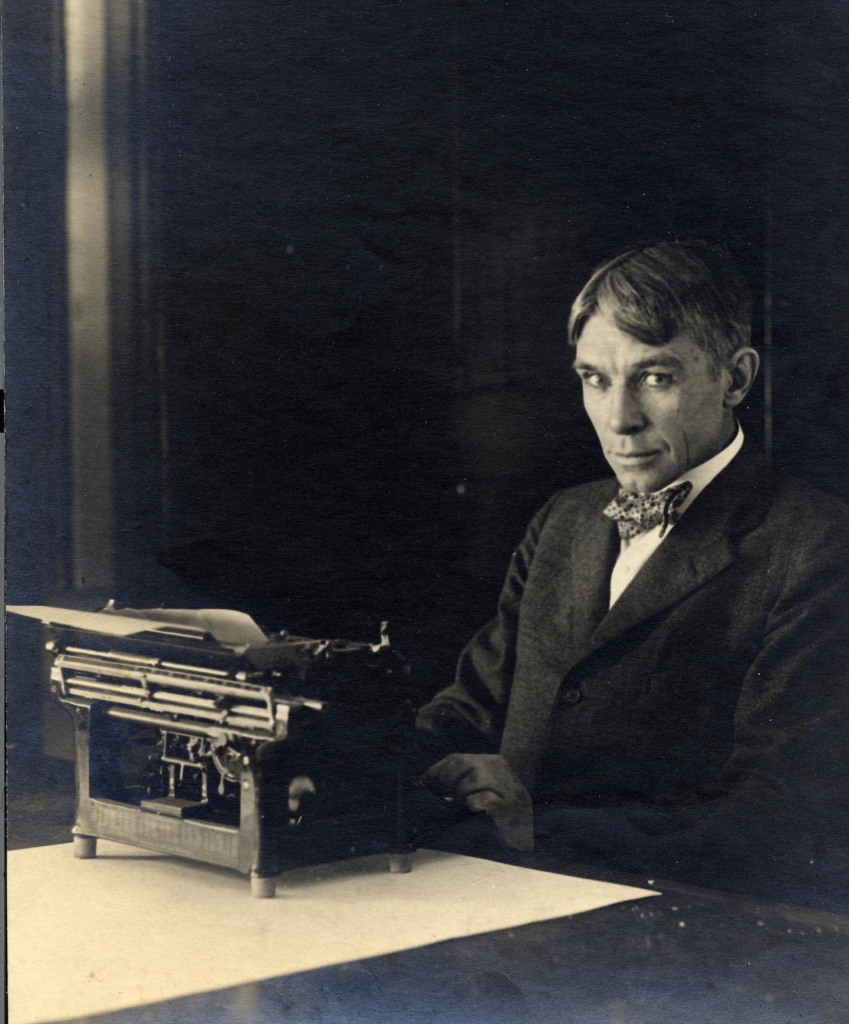
“Time is the coin of your life. It is the only coin you have, and only you can determine how it will be spent. Be careful lest you let other people spend it for you.”
— Carl Sandburg
(Sandburg’s words remind us that every moment is precious and must be spent wisely.)
1971: Apollo 14 Astronauts Walk on the Moon
On February 5, 1971, Apollo 14 astronauts Alan Shepard and Edgar Mitchell took humanity’s next giant leap by walking on the Moon. Their historic moonwalk symbolizes the boundless human spirit of exploration and discovery. Reflecting on the monumental achievement of leaving Earth and venturing into the unknown, Buzz Aldrin later stated:
“The important achievement of Apollo was demonstrating that we could leave this world, set foot on another, and return safely to tell the tale.”
— Buzz Aldrin
(Aldrin’s reflection, shared in interviews following the mission, captures the enduring spirit of exploration that defines our progress.)
These events from February 5 illustrate a rich tapestry of human endeavor—from sacrifice and resilience to innovation and exploration—reminding us to cherish every moment and boldly pursue our dreams.
Leave a Reply
You must be logged in to post a comment.