
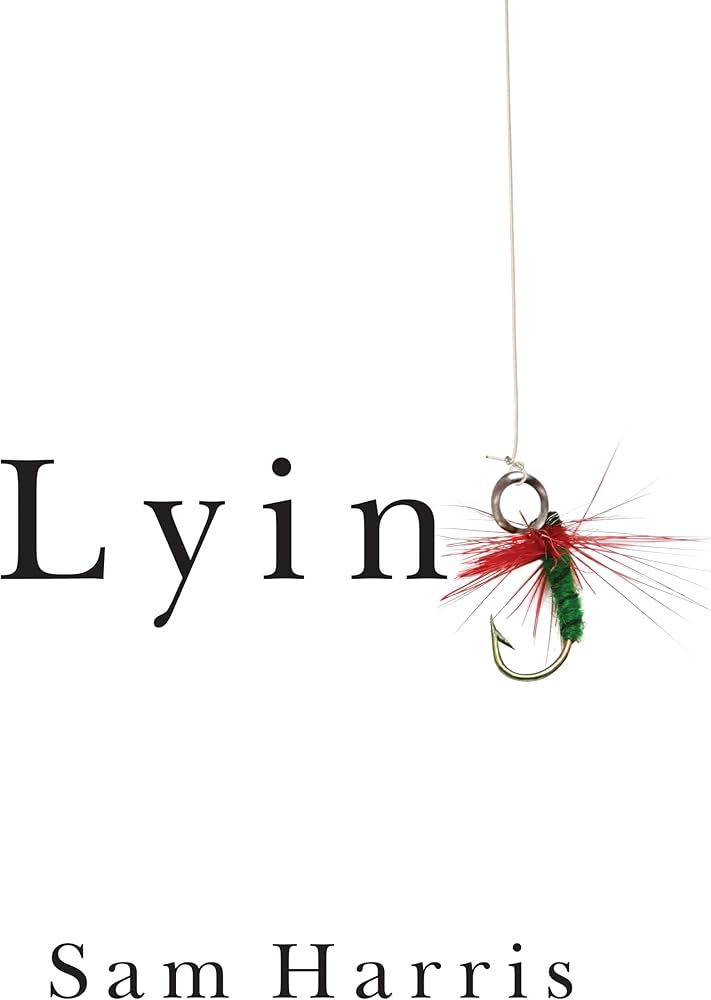
1. The central claim: honesty is always the better policy
Harris begins with a clear thesis: lying is almost never necessary, and truth-telling is a moral and practical superpower. He argues that even small “harmless” lies expand into complications that damage your integrity.
“To lie is to intentionally mislead othwhen they expect honest communication.” ~ Sam Harris
He says society underestimates the real cost of deception, and we dramatically undervalue the simplicity of truth.
2. The psychological cost of lying
Every lie creates cognitive burden. You must remember what you said, maintain the fiction, and live with the fear of being caught.
“The moment we consider lying for our own benefit, we have begun preparing the ground for our own undoing.” ~ Sam Harris
Honesty removes this hidden mental load.
3. How lies undermine relationships
Even if the other person never discovers the lie, the liar knows—and that creates distance, guilt, and self-alienation.
“Every lie is a direct assault upon the autonomy of those we lie to.” ~ Sam Harris
Harris emphasises that healthy relationships depend on transparency, not strategic deception.
4. Lies erode trust—the foundation of society
Trust is fragile. Lies corrode the social contract and slowly poison personal and professional relationships.
“We pay a terrible price for the lies we tell, and even the most benign lies are part of a web of deceit that weakens the bonds between people.” ~ Sam Harris
Truth is not just moral; it’s socially structural.
5. White lies aren’t kind—they’re disrespectful
People commonly justify “white lies” to protect feelings, but Harris argues they are patronising and avoid real communication.
“White lies are merely exercises in aversion. They are attempts to spare ourselves the discomfort of being honest.” ~ Sam Harris
Honesty paired with kindness is far more respectful.
6. Giving people the truth gives them autonomy
When you lie to someone “for their own good,” you deny them the information they need to make real choices.
“To lie is to deny others a view of the world they might need.” ~ Sam Harris
Honesty equals empowerment.
7. Lying creates a habit of avoidance
Lies appear to remove discomfort, but they actually train you to avoid difficulty, which weakens your courage.
“The desire to avoid embarrassment or emotional discomfort produces many of the lies we tell.” ~ Sam Harris
Truth forces you to grow stronger.
8. Honesty doesn’t require cruelty
Telling the truth does not mean delivering it with harshness. Harris emphasises honest kindness.
“Honesty is not the same as unguarded self-expression.”
~ Sam Harris
You can be truthful without being blunt or rude.
9. Lies compound into more lies
One lie often requires more lies to maintain it, creating a chain reaction.
“One lie almost always necessitates another.”
~ Sam Harris
This is how small deceptions become life-altering burdens.
10. Lying damages the liar more than the listener
Harris argues that deception corrodes your sense of self and fractures your identity.
“You become someone who must keep track of a false reality.”
~ Sam Harris
Truth keeps your inner and outer life aligned.
11. Honesty simplifies life
Telling the truth—even when awkward—leads to a clearer, lighter existence.
“The benefits of telling the truth far outweigh the discomfort it occasionally creates.”
~ Sam Harris
When you stop lying, guilt disappears and life becomes straightforward.
12. Lying corrupts institutions
Harris points out that societal failures—corruption, bad leadership, political dysfunction—stem from systematic dishonesty.
“Lies are the social equivalent of toxic waste.”
~ Sam Harris
Large-scale dishonesty spreads like pollution.
13. Most lies hide a failure of courage
At the heart of nearly every lie is a fear: fear of judgment, conflict, embarrassment, or consequences.
“We often lie for no other reason than our unwillingness to tolerate short-term discomfort.”
~ Sam Harris
Courage is truth put into action.
14. Radical honesty creates better relationships
Harris isn’t advocating for harshness—he’s advocating for transparent, compassionate truth.
“Sincere, honest communication is the foundation of any good relationship.”
~ Sam Harris
Honesty strengthens the bond, even when it stings at first.
15. Honesty produces clarity in professional life
Workplaces become more efficient and trustworthy when honesty is standard.
“We can create an environment where honest communication is the expectation, not the exception.”
~ Sam Harris
Clear information → clear decisions.
16. Lies create moral confusion
Harris explains that lying erodes our ability to tell right from wrong.
“Deception forces us to juggle competing versions of reality.”
~ Sam Harris
Truth restores moral alignment.
17. The long-term consequences of lies are unpredictable
A lie may seem small, but its ripple effects, once released, cannot be controlled.
“We often cannot foresee the consequences of our own deception.”
~ Sam Harris
Truth removes these unknown risks.
18. Truth is a gift you give others
Honesty gives people the dignity of reality.
“An honest person is a safe person.”
~ Sam Harris
The people in your life learn they can relax around you.
19. Truth is a gift you give yourself
Harris argues that honesty leads to inner alignment—your words, values, and actions match.
“A commitment to telling the truth is a commitment to a life of integrity.”
~ Sam Harris
Consistency creates psychological strength.
20. The final lesson: lying is a path to chaos; honesty is a path to freedom
Harris closes by insisting that the simplest ethical rule is also the most powerful:
Tell the truth. Always.
Your relationships, your character, and your life become lighter, freer, and more meaningful.
“Lying is the royal road to chaos.”
~ Sam Harris
Truth clarifies life; lies distort it.
Ultimate Insight
Honesty is not just moral—it is a practical superpower that frees your mind, strengthens your relationships, and simplifies your life.
If you want, I can now continue your series with the next book—
➡ Man’s Search for Meaning by Viktor Frankl — with real quotes for each section.
Leave a Reply
You must be logged in to post a comment.