
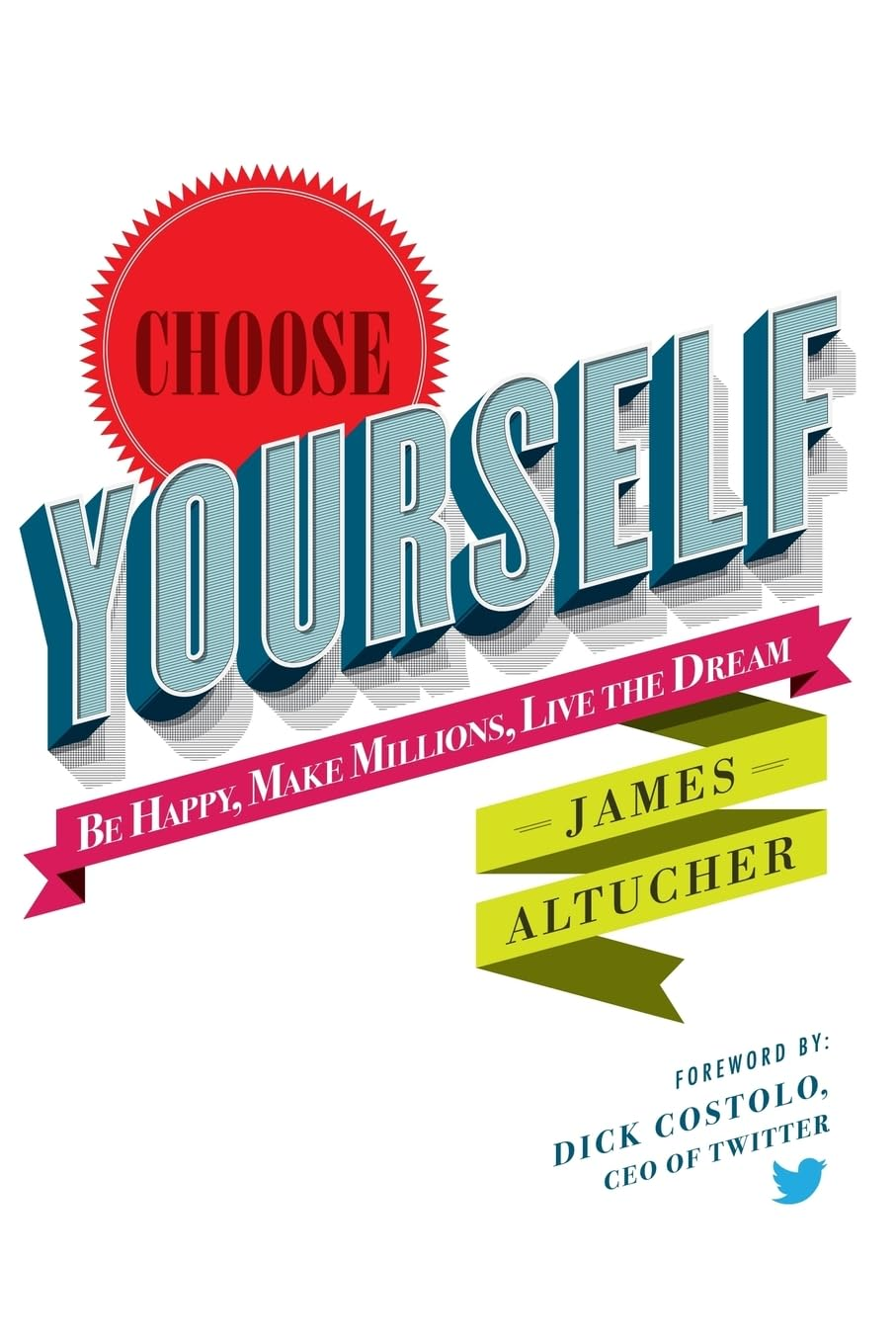

Overview
Choose Yourself is James Altucher’s wake-up call to everyone who’s waiting for permission—from employers, institutions, or society—to live the life they want. He argues that we are entering a new era where the traditional systems of success (stable jobs, big companies, pensions) are collapsing, and the only real path to security and fulfillment is to bet on yourself.
Altucher combines personal failures, financial ruin, and reinvention into a practical guide for building a life of independence—emotionally, creatively, and financially. The heart of the message: stop waiting to be chosen; choose yourself.
1. The Age of the Individual
Altucher begins with a simple but powerful observation: the gatekeepers are gone. Technology has removed middlemen—publishers, studios, employers, investors. The new economy rewards those who create, connect, and share value directly.
He calls this era The Choose Yourself Era, where opportunities belong to those who are willing to take responsibility for their lives instead of waiting for institutions to “pick” them.
“You no longer have to wait for someone to choose you. You can choose yourself.”
~ James Altucher
He points out that job security is an illusion. Companies lay off workers at will, industries are disrupted, and loyalty to corporations no longer guarantees stability. The only safe investment is in yourself—your skills, ideas, and adaptability.
2. The Power of Self-Reliance
The central mindset shift of the book is that nobody is coming to save you. The government, your boss, or the market won’t make you happy or successful. The moment you accept full responsibility, you gain power.
Altucher argues that success in the modern world doesn’t come from credentials or connections—it comes from energy, creativity, and persistence.
“The only person you are destined to become is the person you decide to be.”
~ James Altucher
By choosing yourself, you stop outsourcing control over your life. You move from reacting to creating. From depending on approval to acting from purpose.
3. The Daily Practice: Building the Four Bodies
Altucher believes the foundation of success is maintaining four key aspects of yourself—what he calls The Daily Practice. If you nurture these four “bodies” every day, everything else follows.
1. Physical
Take care of your body with sleep, movement, and healthy food. A tired, sick body can’t support creativity or focus.
“If you don’t take care of your physical self, you have no foundation for anything else.”
2. Emotional
Avoid toxic people, situations, and habits. Practice gratitude and forgiveness daily.
“You become the average of the five people you spend the most time with. Choose wisely.”
3. Mental
Feed your mind every day. Read, write, learn new skills, ask questions.
“Every day, write down ten new ideas. They don’t have to be good. They just have to exist.”
4. Spiritual
You don’t have to be religious—just stay connected to something larger than yourself. Meditation, nature, or quiet reflection all count.
“Silence is the only place where you can hear your true self.”
Altucher insists that doing these things daily compounds over time like interest, leading to an upward spiral of energy, creativity, and opportunity.
4. Why Failure Is a Gift
Altucher’s life is filled with extreme highs and lows—selling companies for millions, losing everything, becoming depressed, and rebuilding from scratch. He calls failure a necessary teacher.
“Every time I’ve hit bottom, I’ve learned something that couldn’t be taught any other way.”
~ James Altucher
He reframes failure as feedback: it’s information about what doesn’t work, helping you refine what does. The people who thrive are those who learn quickly, recover fast, and keep experimenting.
Instead of obsessing over avoiding mistakes, he encourages micro-failures—small, recoverable risks that lead to growth. Success, he says, is simply improving the ratio of good decisions to bad ones.
5. Creating Your Own Opportunities
In a world without gatekeepers, the best opportunities are self-created. Altucher encourages readers to build idea muscles by practicing creativity daily. His tool: the Idea Machine.
Each day, write down 10 new ideas. They can be business ideas, book titles, new habits, ways to help others—anything. Most will be bad, but the habit of generating them trains your brain to be creative on demand.
“Ideas are the currency of the 21st century.”
~ James Altucher
The purpose isn’t to implement them all, but to make idea-generation automatic—so when the right opportunity appears, you’re ready to act.
6. The Myth of Passion and the Truth About Curiosity
Altucher warns that the advice “follow your passion” can be misleading. Many people don’t know their passion, or it changes over time. Instead, he suggests following curiosity—tiny sparks of interest that can grow into something meaningful if nurtured.
“Passion is a loaded word. Start with curiosity—it’s gentler, and it leads somewhere real.”
~ James Altucher
Curiosity leads to exploration, which builds skills, which eventually turns into passion. The trick is to stay in motion—always learning, experimenting, and creating.
7. The Importance of Saying No
Altucher argues that success comes not from adding more, but from subtracting distractions. Saying no protects your time, energy, and mental space.
He learned to say no to people, projects, and habits that drained him. Each “no” created room for something better.
“Every time you say yes to something unimportant, you’re saying no to something that could change your life.”
~ James Altucher
Boundaries are acts of self-respect. They’re how you “choose yourself” each day.
8. Reinvention as a Lifestyle
In the modern economy, stability is gone—but that’s an opportunity. Altucher suggests we must constantly reinvent ourselves every few years. Reinvention is no longer a one-time event—it’s a habit.
Steps to reinvention:
- Acknowledge where you are now.
- Explore new curiosities and learn from others.
- Experiment—small projects, collaborations, prototypes.
- Persist until something clicks, then scale it.
“Reinvention is the only constant in a world that refuses to stand still.”
~ James Altucher
He emphasizes that reinvention isn’t about changing who you are—it’s about discovering new ways to express your strengths.
9. Choosing Yourself Financially
Altucher teaches that financial freedom begins with independence, not wealth. You don’t need millions—you need control.
He advocates creating multiple income streams:
- Freelancing or consulting in your area of expertise.
- Starting a small, automated business.
- Investing wisely (but only in what you understand).
- Building intellectual property—books, courses, or media that scale.
“Money is not the goal. Freedom is the goal. Money is just the byproduct.”
~ James Altucher
Choosing yourself financially means escaping dependence on a single employer or paycheck. It’s about designing income that aligns with your values.
10. Building Relationships the Right Way
Altucher stresses that relationships built on authenticity, generosity, and shared curiosity are the foundation of opportunity. Instead of networking for gain, he advocates connecting for value—help others first, without expecting anything.
“The only real networking is being the kind of person people want to be around.”
~ James Altucher
He encourages asking “How can I help?” instead of “What can I get?” Relationships built this way naturally expand influence and trust.
11. Emotional Resilience: Bouncing Back from Pain
Altucher writes candidly about depression, rejection, and financial collapse. His message: emotional pain is inevitable, but how you respond defines your future.
He recommends gratitude journaling, meditation, and creative expression to process setbacks. Each helps break the cycle of self-pity and restore perspective.
“When you are grateful, fear disappears and abundance appears.”
~ James Altucher
Pain, he says, is information—a signal that change is necessary. The faster you learn from it, the quicker you grow.
12. The Freedom of Simplicity
Choosing yourself often means simplifying. Altucher downsized his possessions, his schedule, and his circle of friends. Simplification creates mental clarity and allows focus on what truly matters.
“Freedom starts the moment you realize you have nothing to prove.”
~ James Altucher
He equates simplicity with strength—it frees energy from clutter and directs it toward creativity and peace of mind.
13. The Inner Game: Dealing with Fear and Doubt
Altucher emphasizes that fear never disappears—it’s managed through small, courageous actions. The best antidote to fear is movement.
He encourages breaking big leaps into micro-steps that make progress less intimidating. Confidence grows from experience, not theory.
“Confidence is earned by doing, not by waiting to feel ready.”
~ James Altucher
Every small win reprograms the brain to expect success instead of failure.
14. Abundance vs. Scarcity Mindset
Altucher contrasts the scarcity mindset (believing opportunities are limited) with the abundance mindset (believing they’re infinite). When you see abundance, you act generously, take chances, and collaborate freely.
“When you choose yourself, you stop competing and start creating.”
~ James Altucher
Abundance thinking transforms envy into curiosity, fear into innovation, and comparison into creation.
15. Creative Autonomy and the Future of Work
The internet has made creative independence more accessible than ever. Altucher argues that personal brands, creators, and freelancers now hold the power that used to belong to corporations.
He urges readers to create their own platforms—blogs, newsletters, podcasts, or online courses—so they control their message and income.
“Ownership is the new job security.”
~ James Altucher
This isn’t just about making money—it’s about freedom from control, bureaucracy, and permission.
16. Choosing Yourself Spiritually
Beyond business and money, Altucher sees “choosing yourself” as a spiritual act—listening to your inner voice instead of society’s noise.
Meditation, gratitude, and solitude help you stay connected to what’s real. He suggests viewing life as a creative experiment rather than a race for validation.
“When you are true to yourself, everything else begins to align.”
~ James Altucher
Choosing yourself spiritually means trusting that your own path, however unconventional, is enough.
17. Helping Others Choose Themselves
The ultimate expression of choosing yourself, Altucher says, is helping others do the same. Success multiplies when shared. By teaching, mentoring, or simply encouraging others, you create a ripple effect of empowerment.
“The more you help others rise, the higher you climb.”
~ James Altucher
Contribution turns personal success into lasting meaning.
18. The Freedom to Redefine Success
Altucher closes with a challenge: stop chasing society’s version of success and define your own. For some, it’s financial independence; for others, it’s creativity, time with family, or peace of mind.
“Success is not being picked—it’s picking yourself, over and over, every day.”
~ James Altucher
True freedom isn’t doing whatever you want—it’s aligning what you do with who you are.
Key Takeaways
- Stop waiting for permission—create your own path.
- Practice The Daily Routine: physical, emotional, mental, spiritual health.
- Treat failure as information, not identity.
- Build your idea muscle by writing 10 ideas daily.
- Reinvent yourself regularly.
- Create multiple streams of income that align with your passions.
- Say no to everything that dilutes your energy.
- Define success on your own terms, not society’s.
- Help others rise—because freedom shared becomes purpose.
Final Reflection
Choose Yourself is not a business manual—it’s a manifesto for self-responsibility in a world of uncertainty. It teaches that the path to freedom begins inside: by valuing your time, energy, and ideas as much as you once valued others’ approval.
“You were born to be the creator of your own destiny, not an employee of someone else’s dream.”
~ James Altucher
The book ends with a simple but powerful truth: The world doesn’t owe you opportunity—but it will respond, always, to the person brave enough to choose themselves.
Leave a Reply
You must be logged in to post a comment.