
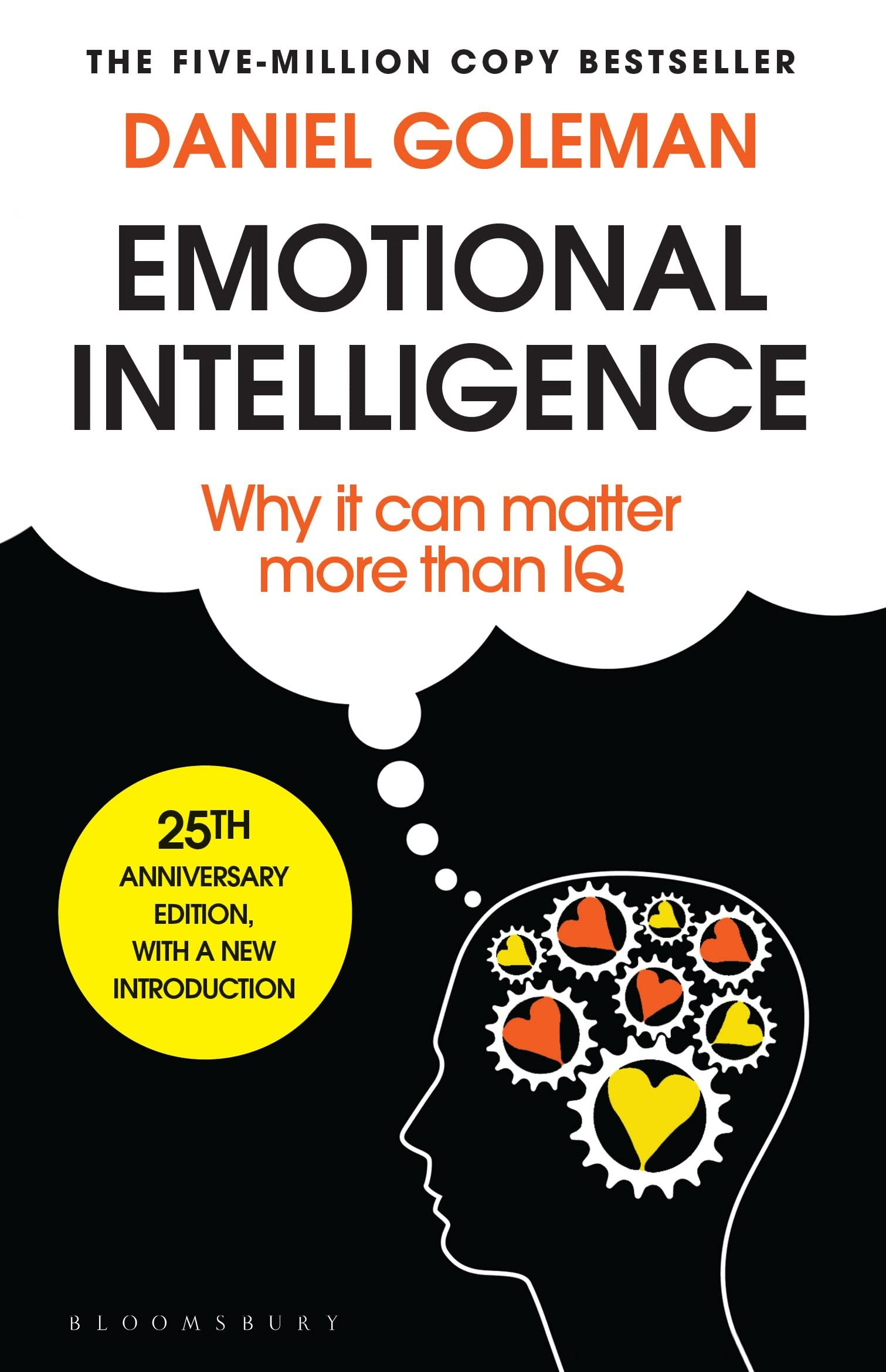
(Summary organized by the book’s real five parts, with verified quotes)
Goleman’s argument reshaped psychology and culture: success in life depends as much on emotional intelligence—self-awareness, self-regulation, empathy, motivation, and social skill—as on IQ. Emotional competence determines how well we handle ourselves and relationships.
Part I — The Emotional Brain
Human beings possess two intertwined systems of understanding: rational and emotional. Emotions evolved for survival and act faster than logical reasoning.
“In a very real sense we have two minds, one that thinks and one that feels.” ~ Daniel Goleman
The amygdala can trigger reactions before the neocortex fully evaluates reality—explaining impulsive decisions and regret.
Part II — The Nature of Emotional Intelligence
Goleman defines emotional intelligence as five core abilities: knowing one’s emotions, managing them, self-motivation, recognizing emotions in others, and handling relationships effectively.
“Self-awareness—recognizing a feeling as it happens—is the keystone of emotional intelligence.” ~ Daniel Goleman
These skills influence resilience, adaptability, and wise judgment more than cognitive ability alone.
Part III — Emotional Intelligence Applied
Emotional intelligence predicts performance in leadership, teamwork, conflict resolution, parenting, education, and decision-making. Competence with emotions turns knowledge into action.
“People with well-developed emotional skills are also more likely to be content and effective in their lives.” ~ Daniel Goleman
EQ determines how we respond under stress, uncertainty, or disappointment—the moments that define outcomes.
Part IV — Windows of Opportunity
Childhood and adolescence are critical developmental stages; emotional habits—impulse control, empathy, persistence—form early. Yet emotional intelligence can grow throughout life with practice.
“The neural circuits involved in emotional responding are malleable—through experience they can be reshaped.” ~ Daniel Goleman
Environments that model calmness, communication, and understanding strengthen emotional capacity.
Part V — Raising Emotional Intelligence
Schools, families, and workplaces can intentionally cultivate EQ through teaching self-awareness, emotional vocabulary, active listening, responsibility, and compassion.
“Caring is a powerful business advantage.” ~ Daniel Goleman
A society that values empathy, patience, and cooperation becomes safer, happier, and more productive.
Core lesson:
Emotional intelligence is not a personality trait but a set of learnable skills.
By noticing emotions, managing reactions, understanding others, and choosing responses aligned with values, people build stronger relationships, clearer thinking, and more meaningful lives.
Leave a Reply
You must be logged in to post a comment.