
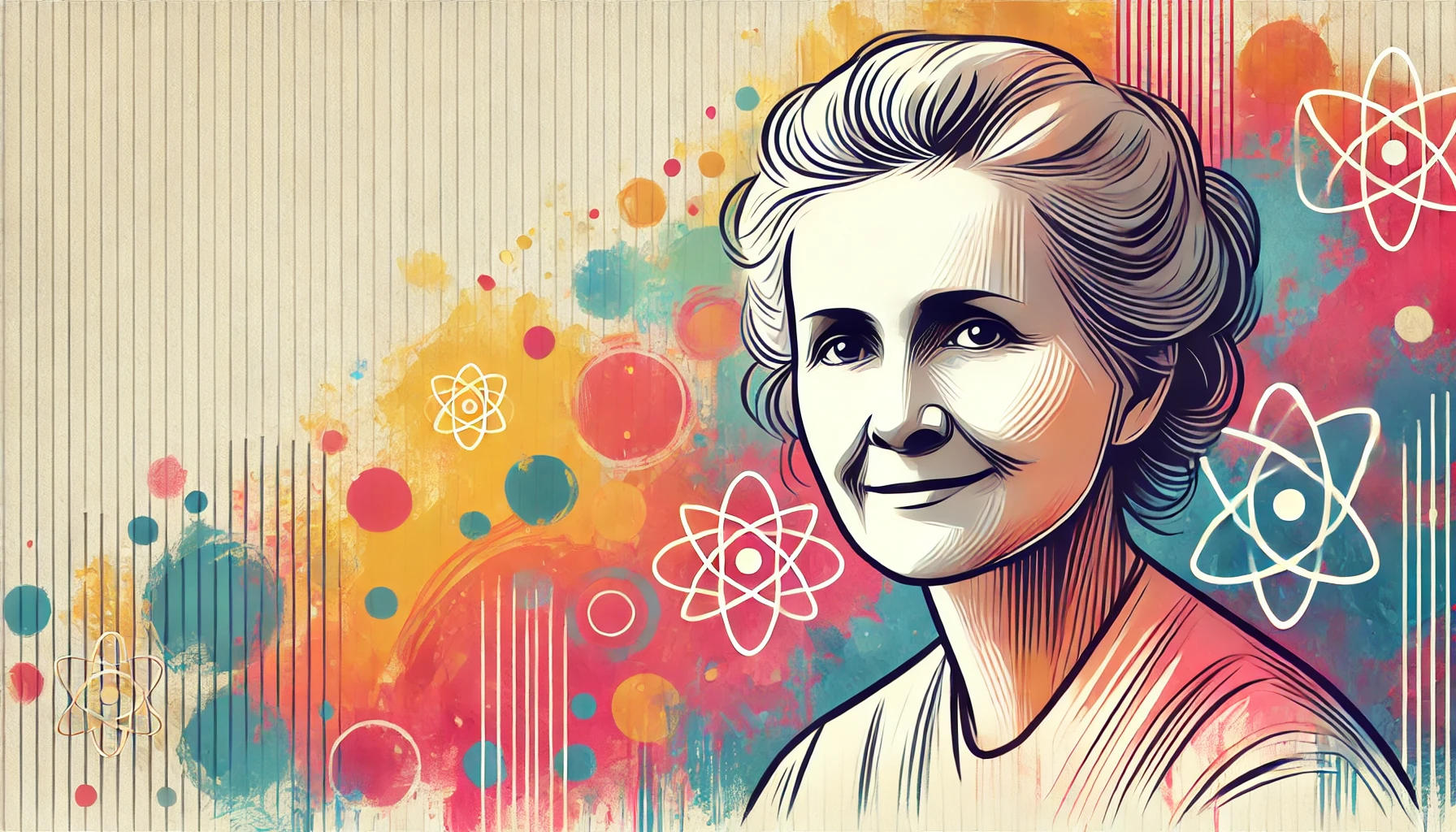
“Nothing in life is to be feared; it is only to be understood. Now is the time to understand more, so that we may fear less.”
“Be less curious about people and more curious about ideas.”
“I am among those who think that science has great beauty.”
“One never notices what has been done; one can only see what remains to be done.”
“Life is not easy for any of us. But what of that? We must have perseverance and above all confidence in ourselves.”
“A scientist in his laboratory is not only a technician: he is also a child confronting natural phenomena that impress him as though they were fairy tales.”
“I was taught that the way of progress was neither swift nor easy.”
“You cannot hope to build a better world without improving the individuals.”
“First principle: never to let one’s self be beaten down by persons or by events.”
“I am one of those who think, like Nobel, that humanity will draw more good than evil from new discoveries.”
Here are 5 interesting facts about Marie Curie:
- First Woman to Win a Nobel Prize: Marie Curie was the first woman ever to win a Nobel Prize, and she didn’t stop there—she became the first person (and remains the only woman) to win Nobel Prizes in two different scientific fields: Physics in 1903 and Chemistry in 1911.
- Pioneering Work on Radioactivity: Marie Curie coined the term “radioactivity” and conducted groundbreaking research on the subject. Her work led to the discovery of two elements, polonium (named after her native Poland) and radium.
- Faced Adversity as a Female Scientist: Despite her monumental achievements, Curie faced significant discrimination as a woman in science. She often worked under poor conditions and was not accepted into the French Academy of Sciences despite her accomplishments.
- Her Research Took a Physical Toll: Curie’s long-term exposure to radioactive materials led to serious health problems, including aplastic anemia, which eventually caused her death. At the time, the dangers of radiation exposure were not fully understood, and she often handled radioactive materials without protection.
- Mobile X-ray Units in WWI: During World War I, Curie used her knowledge of radioactivity to equip ambulances with X-ray machines, which she called “Little Curies.” These mobile units helped doctors on the front lines treat soldiers by quickly identifying fractures and shrapnel in wounded soldiers.
Marie Curie’s legacy in science and her contributions to society remain monumental, making her one of the most influential scientists in history.
Leave a Reply
You must be logged in to post a comment.