
Overview
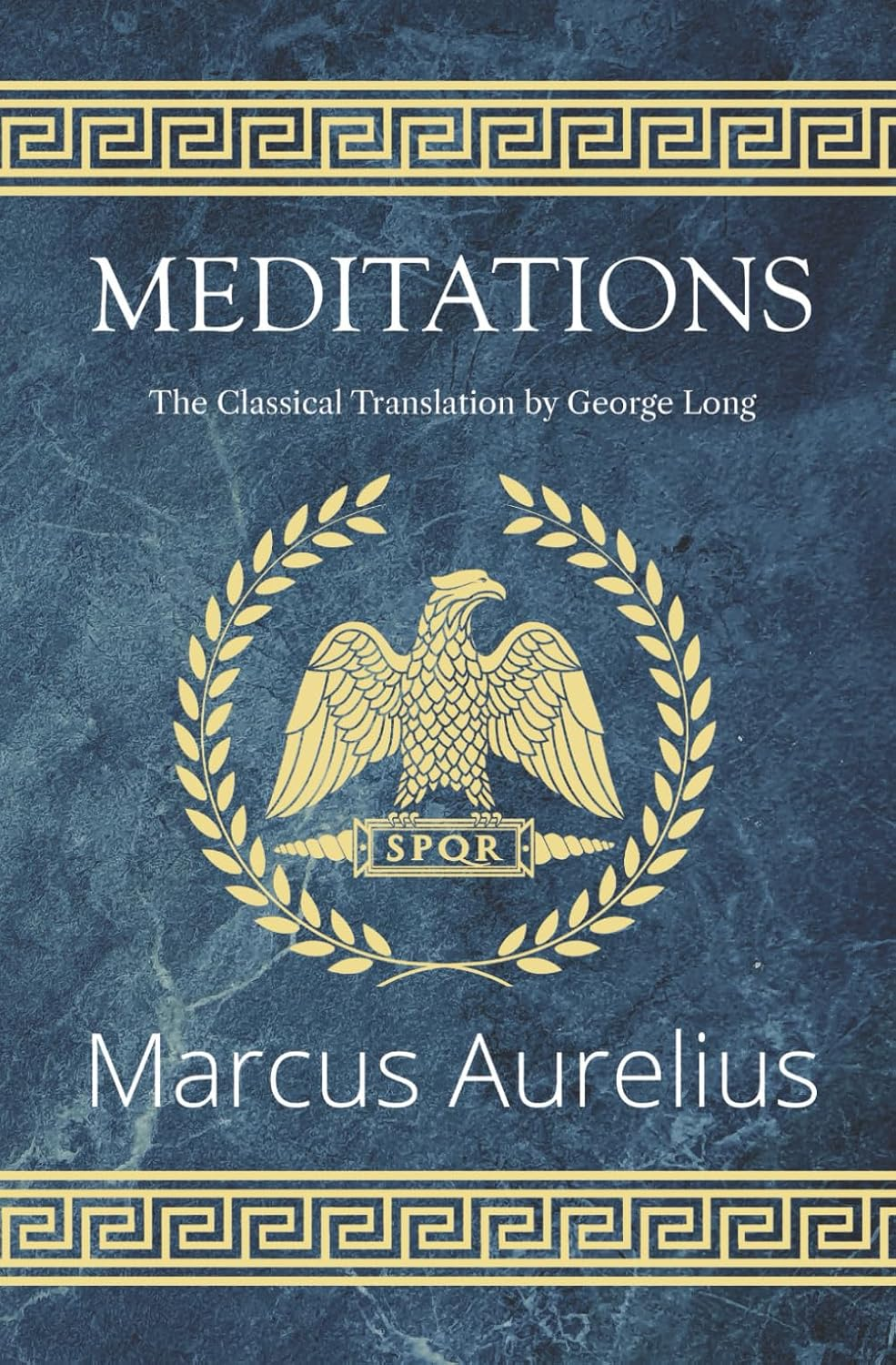
Marcus Aurelius’s Meditations is one of history’s most profound works on how to live with integrity, calm, and purpose. Written not for publication but as private reflections, it captures the daily thoughts of a Roman emperor struggling to stay virtuous amid pressure, loss, and responsibility.
It stands as the cornerstone of Stoic philosophy, teaching that while we cannot control external events, we can always control our judgments, choices, and reactions. The book’s enduring message: a good life is achieved by mastering the self, serving the common good, and accepting the universe as it is.
“You have power over your mind — not outside events. Realize this, and you will find strength.”
~ Marcus Aurelius
1. The Stoic Foundation of Meditations
Marcus Aurelius was emperor of Rome (161–180 AD), yet his journal is strikingly humble. His goal was not greatness but goodness.
Stoicism taught that peace comes from living according to nature — meaning reason, virtue, and acceptance of fate. By aligning one’s actions with wisdom, justice, courage, and temperance, one becomes immune to chaos.
“The happiness of your life depends upon the quality of your thoughts.”
~ Marcus Aurelius
Lesson: You cannot always control what happens, but you can always control who you choose to be in response.
2. Control and Acceptance
The heart of Stoicism lies in distinguishing between what’s within our control and what’s not. Our thoughts, choices, and moral purpose are ours; everything else — reputation, weather, illness, others’ opinions — belongs to fate.
“If you are distressed by anything external, the pain is not due to the thing itself, but to your estimate of it.”
~ Marcus Aurelius
By refusing to waste energy on what can’t be changed, we conserve strength for what truly matters.
Practice: Each morning, remind yourself: Today I will meet interference, ingratitude, arrogance, betrayal, selfishness, and ignorance — and none of it can harm my integrity unless I let it.
3. The Impermanence of Life
Marcus constantly reminds himself that life is short and death certain. Far from morbid, this awareness clarifies what’s important.
“Do not act as if you were going to live ten thousand years. Death hangs over you. While you live, while it is in your power, be good.”
~ Marcus Aurelius
Remembering mortality sharpens gratitude and focus. It frees us from trivial concerns and urges us to act with urgency and kindness.
Lesson: Memento mori — remembering death — is the key to living fully.
4. Living According to Nature
For the Stoics, “living in harmony with nature” meant acting in accordance with reason and fulfilling our duty as rational, social beings.
“What is not good for the hive cannot be good for the bee.”
~ Marcus Aurelius
We are part of a larger order — the cosmos, the city, the family — and well-being arises from serving that order rather than resisting it.
Practice: Before acting, ask: Is this choice consistent with nature — with reason, fairness, and the greater good?
5. The Discipline of Thought
Marcus constantly examines his own mind. He sees thoughts as seeds that grow into destiny.
“The soul becomes dyed with the color of its thoughts.”
~ Marcus Aurelius
To cultivate tranquility, we must monitor what enters our consciousness and remove resentment, greed, or vanity as soon as they arise.
Lesson: Self-mastery begins with mental hygiene — purifying thought before it becomes habit.
6. The Present Moment
The emperor reminds himself not to dwell on the past or worry about the future. Only the present moment is real.
“Confine yourself to the present.”
~ Marcus Aurelius
Regret and anxiety are illusions; contentment is found in total presence.
Practice: Throughout the day, return your attention to the task at hand. Ask, Am I here, now?
7. Humility and Perspective
Though the most powerful man in the world, Marcus saw his power as temporary and insignificant compared with time and nature.
“Soon you will have forgotten the world, and soon the world will have forgotten you.” ~ Marcus Aurelius
Remembering our smallness brings humility and serenity. Ambition and ego fade when measured against eternity.
Lesson: Glory fades; character endures.
8. Duty and Service
Marcus’s Stoicism was not escapism but engagement. He viewed himself as a servant of the greater good.
“Waste no more time arguing what a good man should be. Be one.” ~ Marcus Aurelius
Happiness lies in doing one’s duty with excellence, whatever one’s station.
Practice: Dedicate your actions to service — of family, society, or truth — and contentment follows naturally.
9. The Inner Citadel
Marcus describes the inner citadel — an invulnerable fortress of reason and virtue inside each person.
“The mind can convert any obstacle into fuel for its own progress.” ~ Marcus Aurelius
No one can force you to think or act dishonorably; that power belongs to you alone.
Lesson: Your peace depends on internal strength, not external safety.
10. Responding to Adversity
Every challenge, Marcus writes, is an opportunity to practice virtue.
“The impediment to action advances action. What stands in the way becomes the way.” ~ Marcus Aurelius
Obstacles become teachers when we respond with patience and creativity rather than complaint.
Practice: When faced with difficulty, ask: How can I turn this into an exercise in character?
11. Compassion and Tolerance
Though stern with himself, Marcus was compassionate toward others. He saw wrongdoing as ignorance, not evil.
“When you wake up in the morning, tell yourself: the people I deal with today will be meddling, ungrateful, arrogant, dishonest, jealous, and surly… yet they are my kin.” ~ Marcus Aurelius
Understanding human weakness leads to patience, not resentment.
Lesson: Forgive quickly. Others act from confusion, not malice.
12. Simplicity and Self-Discipline
Luxury, fame, and excess are distractions. Marcus admired simplicity and moderation.
“Very little is needed to make a happy life; it is all within yourself.” ~ Marcus Aurelius
Discipline liberates by reducing dependence on externals.
Practice: Simplify your possessions, speech, and habits. The fewer needs you have, the freer you are.
13. Reason and the Universal Logos
Stoicism teaches that reason (logos) pervades the cosmos. Living rationally aligns you with this universal order.
“Everything harmonizes with me, which is harmonious to you, O Universe.” ~ Marcus Aurelius
Seeing oneself as part of something vast replaces loneliness with reverence.
Lesson: Trust the larger order of things. What happens to you is woven into the fabric of what must be.
14. The Brevity of Fame
Marcus dismisses fame as meaningless in the grand scheme.
“Consider how quickly all things are forgotten — the infinite abyss of past and future time.” ~ Marcus Aurelius
Chasing recognition is futile; virtue itself is reward enough.
Lesson: Seek to be good, not remembered.
15. Dealing with Pain and Pleasure
Both pain and pleasure are temporary. Wisdom lies in not over-identifying with either.
“Pain is either unbearable or endurable. If it is unbearable, it ends; if it is endurable, you can bear it.” ~ Marcus Aurelius
Equanimity, not indulgence or avoidance, defines freedom.
Practice: Meet both fortune and misfortune with the same calm acceptance.
16. The Importance of Gratitude
Marcus often expresses gratitude for his teachers, family, and fate. Gratitude anchors humility and joy.
“When you arise in the morning, think of what a precious privilege it is to be alive.” ~ Marcus Aurelius
Focusing on what’s good trains the mind toward peace.
Exercise: Begin each day listing three things that deserve thanks — including challenges that make you wiser.
17. The Role of Reflection
Meditations itself is an act of daily reflection. Marcus used writing to refine his character.
“Look within. Within is the fountain of good, and it will ever bubble up if you will ever dig.” ~ Marcus Aurelius
Self-examination reveals progress and purifies intention.
Practice: Journal each night, asking: Did I live today according to my principles?
18. Living Without Anger
Anger clouds judgment and corrodes the soul. Marcus warns that even justified anger enslaves us.
“The best revenge is to be unlike your enemy.” ~ Marcus Aurelius
The wise person corrects others with calmness, not rage.
Lesson: Keep your composure; nothing disarms hostility like gentleness.
19. Integrity in Action
Virtue, Marcus insists, is the only true good. Wealth, pleasure, and status are indifferent; character alone matters.
“If it is not right, do not do it; if it is not true, do not say it.” ~ Marcus Aurelius
Moral clarity simplifies life by removing internal conflict.
Practice: Use this rule for every decision: Is it right? If not, abstain.
20. The Final Lesson: Serenity Through Virtue
At its core, Meditations teaches that serenity is not found in control, comfort, or escape but in the disciplined practice of virtue — moment by moment, thought by thought.
“When you arise each morning, think of the precious privilege of being alive — to breathe, to think, to enjoy, to love.” ~ Marcus Aurelius
The Stoic life is not cold detachment but active love guided by wisdom. By mastering the self, we serve others; by accepting fate, we find peace.
Ultimate insight: To make the most of life, master your mind, fulfill your duty, and meet each day with gratitude and grace.
Key Takeaways
- You control your mind, not the world.
- Accept impermanence; act with urgency.
- Serve the common good; live according to nature.
- Simplicity and virtue are true wealth.
- Obstacles are opportunities for growth.
- Anger and vanity destroy peace.
- Gratitude and compassion sustain joy.
- The present moment is enough.
- Virtue is its own reward.
- The mind is the fortress of freedom.
Final Reflection
Meditations remains timeless because it speaks to every human struggle — ambition, fear, loss, purpose. Marcus Aurelius, the philosopher-king, shows that greatness is not ruling others but ruling oneself.
“Dwell on the beauty of life. Watch the stars, and see yourself running with them.” ~ Marcus Aurelius
Through calm reflection, honest effort, and love for humanity, Meditations reveals the art of living wisely — and the quiet heroism of a life well governed.
Leave a Reply
You must be logged in to post a comment.