
1520: Martin Luther Publicly Burns the Papal Bull
On December 10, 1520, Martin Luther burned the papal bull that threatened him with excommunication, symbolizing his defiance of the Catholic Church and solidifying the foundation of the Protestant Reformation.
“Here I stand, I can do no other.”
~ Martin Luther
Source: Luther’s speech at the Diet of Worms, 1521
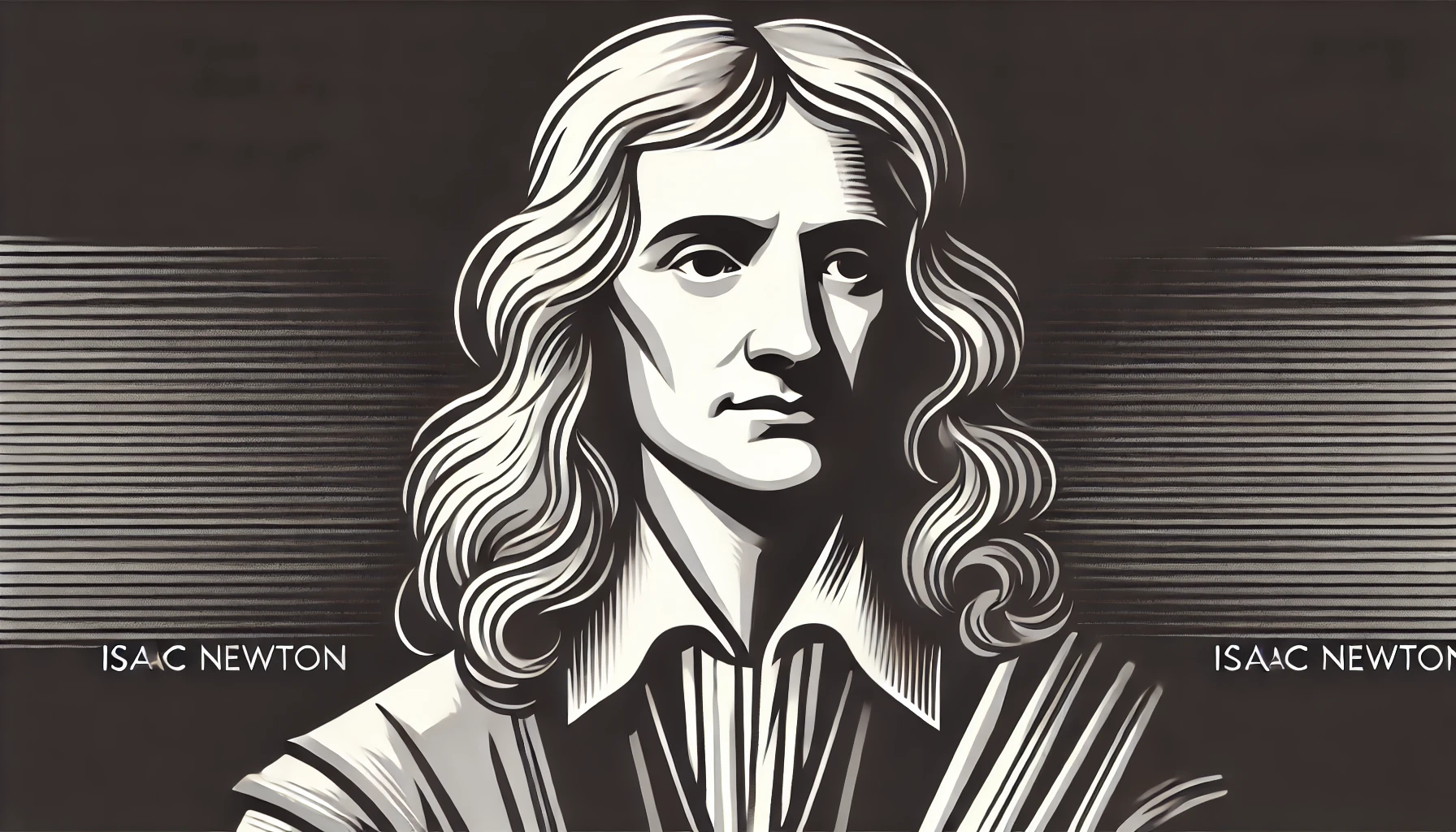
1684: Isaac Newton’s Principia Mathematica Accepted for Publication
On December 10, 1684, Edmond Halley secured funding to publish Isaac Newton’s groundbreaking work, Philosophiæ Naturalis Principia Mathematica, laying the foundation for modern physics.
“If I have seen further, it is by standing on the shoulders of giants.”
~ Isaac Newton
Source: Letter to Robert Hooke, 1675
1817: Mississippi Becomes the 20th U.S. State
On December 10, 1817, Mississippi was admitted as the 20th state of the United States. Known for its rich cultural and historical significance, Mississippi became a key part of the American South.
“History is not was, it is.”
~ William Faulkner (Mississippi native)
Source: Requiem for a Nun, 1951
1896: Alfred Nobel Passes Away, Nobel Prizes Established
On December 10, 1896, Alfred Nobel, the inventor of dynamite and founder of the Nobel Prizes, passed away. His will directed that his fortune be used to reward achievements in science, literature, and peace.
“Hope is nature’s way of enabling us to survive so that we can discover what is worth living for.”
~ Alfred Nobel
Source: Nobel’s personal letters, Nobel Museum
1901: First Nobel Prizes Awarded
On December 10, 1901, the first Nobel Prizes were awarded in Stockholm, Sweden, recognizing achievements in Physics, Chemistry, Medicine, Literature, and Peace.
“Good ideas are not adopted automatically. They must be driven into practice with courageous patience.”
~ Hjalmar Branting, Nobel Peace Prize winner, 1921
Source: Nobel Prize archives
1936: Edward VIII Abdicates the British Throne
On December 10, 1936, Edward VIII abdicated the British throne to marry Wallis Simpson, an American divorcée, making way for his brother, George VI, to become king.
“I have found it impossible to carry the heavy burden of responsibility without the help and support of the woman I love.”
~ Edward VIII
Source: Abdication speech, 1936
1948: United Nations Adopts the Universal Declaration of Human Rights
On December 10, 1948, the Universal Declaration of Human Rights was adopted by the United Nations General Assembly in Paris. This milestone document outlined fundamental human rights for all people.
“To deny people their human rights is to challenge their very humanity.”
~ Nelson Mandela
Source: Mandela’s speech on human rights, 1995
1950: Ralph Bunche Receives the Nobel Peace Prize
On December 10, 1950, Ralph Bunche became the first African American to win the Nobel Peace Prize for his mediation efforts in the Israeli-Arab conflict. He was celebrated for his commitment to peace and diplomacy.
“Peace is no mere matter of men fighting or not fighting. It is the condition under which the best things in human life flourish.”
~ Ralph Bunche
Source: Nobel Lecture, 1950
1964: Martin Luther King Jr. Receives the Nobel Peace Prize
On December 10, 1964, Martin Luther King Jr. received the Nobel Peace Prize for his leadership in the American civil rights movement and his commitment to nonviolent resistance.
“I have the audacity to believe that peoples everywhere can have three meals a day for their bodies, education and culture for their minds, and dignity, equality, and freedom for their spirits.”
~ Martin Luther King Jr.
Source: Nobel Peace Prize acceptance speech, 1964
1993: South African Leaders Nelson Mandela and F.W. de Klerk Win Nobel Peace Prize
On December 10, 1993, Nelson Mandela and F.W. de Klerk jointly received the Nobel Peace Prize for their efforts to end apartheid and establish multiracial democracy in South Africa.
“We must use time wisely and forever realize that the time is always ripe to do right.”
~ Nelson Mandela
Source: Mandela’s Nobel Lecture, 1993
Let me know if you’d like any changes or further refinements!
Leave a Reply
You must be logged in to post a comment.