
.1716: Birth of Philosopher Jean le ;Rond d’Alembert
On November 14, 1716, Jean le Rond d’Alembert, the French philosopher, mathematician, and co-editor of the Encyclopédie, was born. Known for his work in fluid mechanics and mathematics, d’Alembert made lasting contributions to the Enlightenment and scientific thought.
“The true spirit of conversation consists in building on another’s observation, not overturning it.”
“Mathematics is the art of giving the same name to different things.”
“The difficulty lies not in understanding new ideas, but in escaping from the old ones.”
“Philosophy is not just for the few, but for the many; it is the light by which we guide our actions.”
“The greatest minds often achieve success not by breaking down barriers but by creating new paths altogether.”
Unusual Fact: D’Alembert was abandoned as an infant on the steps of the Church of Saint-Jean-le-Rond in Paris, from which he took his name. Raised by foster parents, he went on to become one of France’s leading intellectuals.
1666: Samuel Pepys Records the First Blood Transfusion Experiment
On November 14, 1666, English diarist Samuel Pepys documented the first successful blood transfusion experiment between animals, conducted by Richard Lower. This experiment laid early foundations for human blood transfusion and modern medical practices.
“The marvel of man lies in his relentless quest to understand and mend his own condition.”
~ Samuel Pepys
1851: Moby-Dick Published in the United States
On November 14, 1851, Herman Melville’s Moby-Dick was published in the United States. Although it initially received mixed reviews, the novel became a defining work of American literature and a symbol of ambition, obsession, and human struggle.
“I know not all that may be coming, but be it what it will, I’ll go to it laughing.”
~ Herman Melville
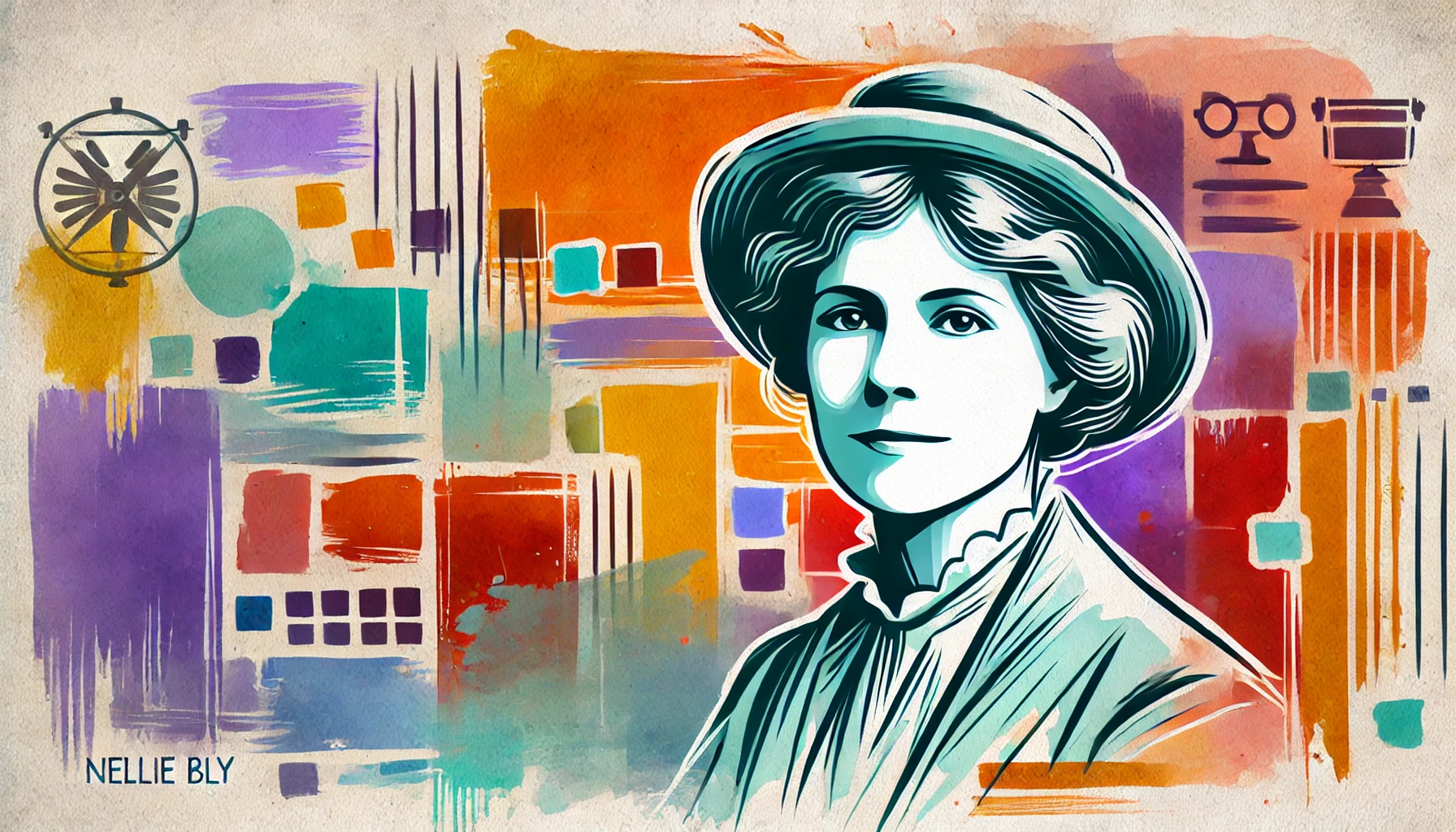
1889: Nellie Bly Begins Record-Breaking Trip Around the World
On November 14, 1889, journalist Nellie Bly set off on her famous journey to travel around the world in under 80 days, inspired by Jules Verne’s novel. She completed her journey in 72 days, setting a world record and pioneering investigative journalism.
“Energy rightly applied and directed will accomplish anything.”
~ Nellie Bly
1922: British Broadcasting Company (BBC) Launches First Radio Broadcast
On November 14, 1922, the BBC aired its first radio broadcast, marking the beginning of public broadcasting in the United Kingdom. The BBC grew to become one of the world’s leading broadcasters, recognized for its dedication to impartial news and educational content.
“We are here to inform, educate, and entertain—our purpose lies in serving the public trust.”
~ John Reith, BBC founder
1940: Coventry Blitz – German Bombing of Coventry, England
On November 14, 1940, Coventry in England was heavily bombed by the German Luftwaffe in what became known as the Coventry Blitz. The bombing destroyed much of the city and left hundreds dead, marking a devastating chapter in World War II.
“In ruins, the spirit of Coventry lives on, undeterred by flames and violence.”
~ Winston Churchill
1969: NASA Launches Apollo 12 to the Moon
On November 14, 1969, NASA launched Apollo 12, the second manned mission to land on the moon. Astronauts Charles Conrad and Alan Bean conducted experiments and collected lunar samples, furthering humanity’s knowledge of the moon’s surface.
“We explore not just for ourselves, but for all who dare to dream of stars.”
~ Charles Conrad
1970: Southern Airways Flight 932 Tragedy with Marshall University Football Team
On November 14, 1970, Southern Airways Flight 932 crashed, killing 75 people, including most of the Marshall University football team. This tragedy deeply affected the university, inspiring a legacy of resilience and unity in the face of loss.
“Out of tragedy, a strength is born—a spirit that will forever carry forward in the hearts of those left behind.”
~ Marshall University tribute
Leave a Reply
You must be logged in to post a comment.