
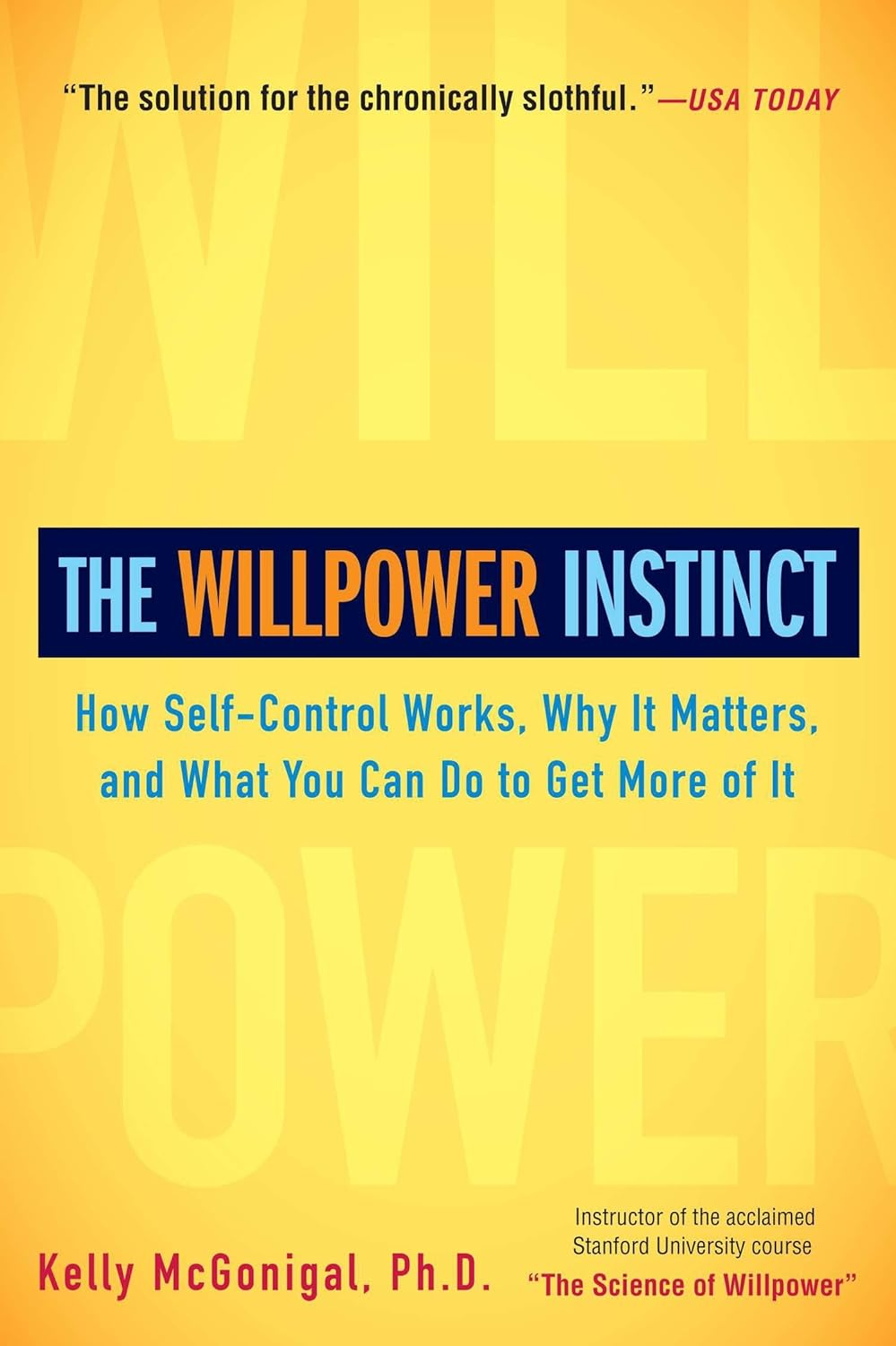
1. The central idea: willpower is a biological skill
McGonigal argues that willpower is not a personality trait but a trainable biological function involving the prefrontal cortex.
“The best way to improve self-control is to understand how and why you lose control.”
~ Kelly McGonigal
By understanding the science, you can strengthen it.
2. Willpower is three powers, not one
She defines willpower as three distinct abilities:
- I will (do what matters)
- I won’t (resist temptation)
- I want (your long-term self)
“Self-control is a matter of remembering what you really want.”
~ Kelly McGonigal
Long-term desire fuels discipline.
3. Willpower is a limited resource (but expandable)
Stress, fatigue, distraction, and emotional overwhelm drain willpower.
But the “muscle” can grow stronger with training.
“The more you use your self-control, the stronger it gets.”
~ Kelly McGonigal
Practise it and it expands.
4. The biology of self-control
Willpower is tied to heart rate variability and the prefrontal cortex’s ability to stay online under stress.
“Your body’s capacity for self-control is linked to your ability to stay calm under pressure.”
~ Kelly McGonigal
Calm body = strong willpower.
5. Stress destroys willpower
Stress shifts your brain into survival mode, where immediate gratification wins.
“When stress takes over, the brain’s reward system hijacks your choices.”
~ Kelly McGonigal
Reducing stress = restoring self-control.
6. Self-forgiveness increases willpower
Surprisingly, beating yourself up after a failure makes relapse more likely.
“People who believe they have blown it are far more likely to give up.”
~ Kelly McGonigal
Self-compassion restores discipline.
7. Future self-connection strengthens willpower
You are more disciplined when you feel connected to your “future you.”
“When you imagine your future self, you make wiser choices today.”
~ Kelly McGonigal
Visualising tomorrow strengthens today’s behaviour.
8. Temptation often masquerades as stress relief
Most impulses arise from the urge to escape discomfort.
“We use procrastination, food, shopping, and screens to soothe stress — not because we really want them.”
~ Kelly McGonigal
Recognising this weakens their power.
9. Small steps create big wins
You don’t strengthen willpower with dramatic gestures, but with repeated small actions.
“Small self-control successes build the foundation for bigger ones.”
~ Kelly McGonigal
Momentum compounds.
10. Mindfulness multiplies willpower
Mindfulness increases awareness of impulses and creates space for choice.
“When you pause and notice what you’re feeling, you take back control.”
~ Kelly McGonigal
Awareness interrupts automatic behaviour.
11. The “pause and plan” response
McGonigal teaches a practical technique: slow your breathing and ask what your long-term self wants.
“Slowing your breath tells your brain that you are safe — and restores self-control.”
~ Kelly McGonigal
Calmness restores clarity.
12. Dopamine fuels temptation
Temptation is not about pleasure — it is about anticipation.
“Dopamine doesn’t signal reward. It signals desire.”
~ Kelly McGonigal
Knowing this helps you break the spell.
13. The trap of moral licensing
After doing something good, people often “reward themselves” with something harmful.
“We use good behaviour as permission to do something bad.”
~ Kelly McGonigal
Awareness prevents the self-sabotage cycle.
14. Social influence shapes willpower
You mimic the discipline — or lack of discipline — of the people you spend time with.
“Self-control is contagious.”
~ Kelly McGonigal
Surround yourself with disciplined people.
15. Willpower grows through discomfort
Training your body and mind to tolerate mild stress expands your self-control capacity.
“You can increase your willpower by allowing yourself to feel uncomfortable.”
~ Kelly McGonigal
Growth lives on the edge of difficulty.
16. The paradox of progress
People become less disciplined after a success because it convinces them they’re “done.”
“Progress can become the enemy of long-term change.”
~ Kelly McGonigal
Success is a beginning, not an end.
17. Commitment beats motivation
Motivation rises and falls. Commitment endures.
“The most effective way to change behaviour is to make a clear commitment.”
~ Kelly McGonigal
Decisions outperform feelings.
18. Your environment determines your willpower success
Self-control is easier when temptations are out of sight and good habits are frictionless.
“The people who succeed at self-control create environments that support their goals.”
~ Kelly McGonigal
Discipline is designed, not wished for.
19. Willpower requires meaning
You are most disciplined when your goals connect to your deeper identity.
“What you care about gives you strength.”
~ Kelly McGonigal
Purpose fuels self-control.
20. The ultimate lesson: willpower is a lifestyle
Self-control is not about forcing yourself through misery.
It is a practice of:
- aligning with your values
- managing your biology
- strengthening your attention
- caring for your future
“Self-control is the ability to act on your values, not your impulses.”
~ Kelly McGonigal
This is the path to a freer, fuller life.
Ultimate Insight
Willpower is not about heroic effort.
It is about understanding your mind, managing your biology, and building habits that align with who you want to become.
If you’re ready, say Next and I’ll generate the next book summary:
➡ The Six Pillars of Self-Esteem — Nathaniel Branden (with real quotes).
Leave a Reply
You must be logged in to post a comment.